Understanding the Mechanics of Dry and Wet Combined Cooling Systems
A dry and wet combined cooling tower, often referred to as a hybrid cooling tower, is an engineered solution designed to capture the benefits of both evaporative and air-cooled heat exchangers. By integrating a dry section—typically located at the top of the unit—with a traditional wet section at the bottom, these systems can manage heat loads with extreme precision. The primary objective is to balance the high thermal efficiency of water evaporation with the water-conserving nature of sensible heat transfer. This dual-circuit approach allows facilities to switch modes based on ambient air temperature and humidity, ensuring optimal performance year-round.
In a standard cycle, hot process fluid first enters the dry heat exchange coils. Here, ambient air is pulled across the fins, reducing the fluid temperature without any water loss. The fluid then proceeds to the wet section, where it is further cooled through evaporation. This serialized process significantly reduces the amount of water required to achieve the desired "approach" temperature, making it a sustainable choice for water-stressed regions.
Effective Plume Abatement and Visibility Control
One of the most significant advantages of utilizing a dry-wet combined cooling method is the elimination of the visible discharge plume. In traditional wet towers, saturated exhaust air hits colder ambient air, causing water vapor to condense into a thick white fog. This can lead to icing on nearby roads, permit issues in urban areas, or public misconceptions about "smoke" emissions.
The hybrid system solves this by mixing the hot, dry air from the upper coils with the moist, saturated air from the lower evaporative section before it leaves the stack. This raises the dry-bulb temperature of the exhaust air, moving the mixture away from the saturation curve on a psychrometric chart. The result is a clear, invisible discharge, even in cold or humid winter conditions.
Operational Modes for Seasonal Efficiency
Dry Mode Operation
During cold winter months, the dry and wet combined cooling tower can operate almost exclusively in dry mode. The spray pumps are turned off, and the heat load is rejected entirely through the finned coils. This results in zero water consumption and zero risk of freezing the basin or creating ice patches in the surrounding environment.
Wet and Hybrid Mode Operation
During the peak of summer, the system engages the wet section to handle the high heat load. The spray water provides the latent heat of vaporization necessary to keep process temperatures within safe limits. In intermediate seasons, the tower modulates between the two, using just enough water to meet the cooling demand while prioritizing energy and fluid conservation.
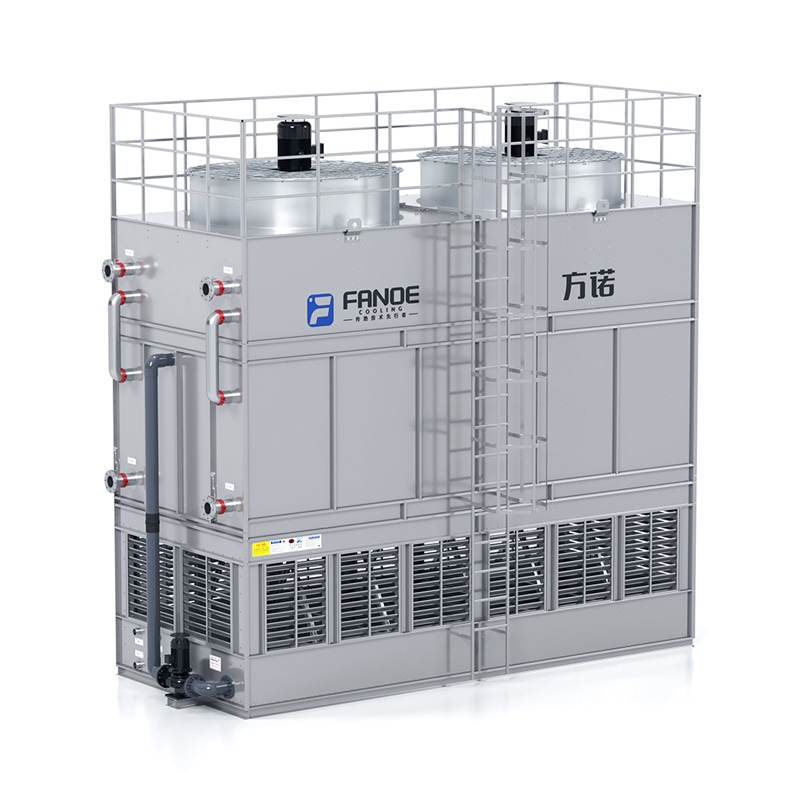
Comparing Combined Cooling with Traditional Methods
When evaluating industrial cooling infrastructure, it is helpful to see how the hybrid model stacks up against single-method towers. The following table highlights the key performance indicators for a dry and wet combined cooling tower versus standalone options:
| Feature |
Wet Cooling Tower |
Dry Cooling Tower |
Dry/Wet Combined |
| Water Consumption |
High |
Zero |
Low to Moderate |
| Plume Visibility |
High (Fogging) |
None |
Eliminated/Reduced |
| Footprint |
Small |
Large |
Medium |
| Efficiency in Heat |
Excellent |
Limited |
Optimized |
Practical Benefits for Industrial Facilities
Implementing a dry and wet combined cooling tower provides several constructive advantages beyond simple heat rejection. Facility managers often choose these systems to meet stringent environmental regulations and reduce long-term operational costs. Key benefits include:
- Significant reduction in annual water makeup costs, often saving up to 30-50% compared to wet towers.
- Enhanced compliance with local zoning laws regarding visible "pollution" or plume shadows.
- Lower chemical treatment requirements due to the reduced volume of evaporated water and blowdown.
- Extended equipment lifespan as the dry section can handle a portion of the load, reducing the scaling and corrosion potential in the wet section.
Ultimately, while the initial capital investment for a combined system may be higher than a simple evaporative tower, the return on investment (ROI) is realized quickly through water savings, lower maintenance, and improved community relations. It remains the gold standard for modern industrial cooling where sustainability and performance must coexist.



 Eng
Eng English
 中文简体
中文简体

 What Is an Open Circuit Cooling Tower and How Does It Work?
 What Is a Closed Type Cooling Tower and When Should You Use One?How a Closed Type Cooling Tower Actually Works A closed type cooling tower — also widely referred to as a closed-circuit cooling tower, closed-loop c...
 Cooling Tower Guide: Types, How They Work & Selection CriteriaHow a Cooling Tower Actually Works A cooling tower is a heat rejection device that removes waste heat from a process or building system by transferrin...
 Industrial Cooling Towers: How They Work, Types, and How to Keep Them Running RightWhat Industrial Cooling Towers Do and Why They Matter Industrial cooling towers are large heat rejection systems designed to remove excess thermal en...
 Evaporative Condenser Explained: How It Works, How to Choose One, and How to Keep It RunningWhat Is an Evaporative Condenser and How Does It Work? An evaporative condenser is a heat rejection device that combines the functions of a condenser ...