


 Eng
Eng English
 中文简体
中文简体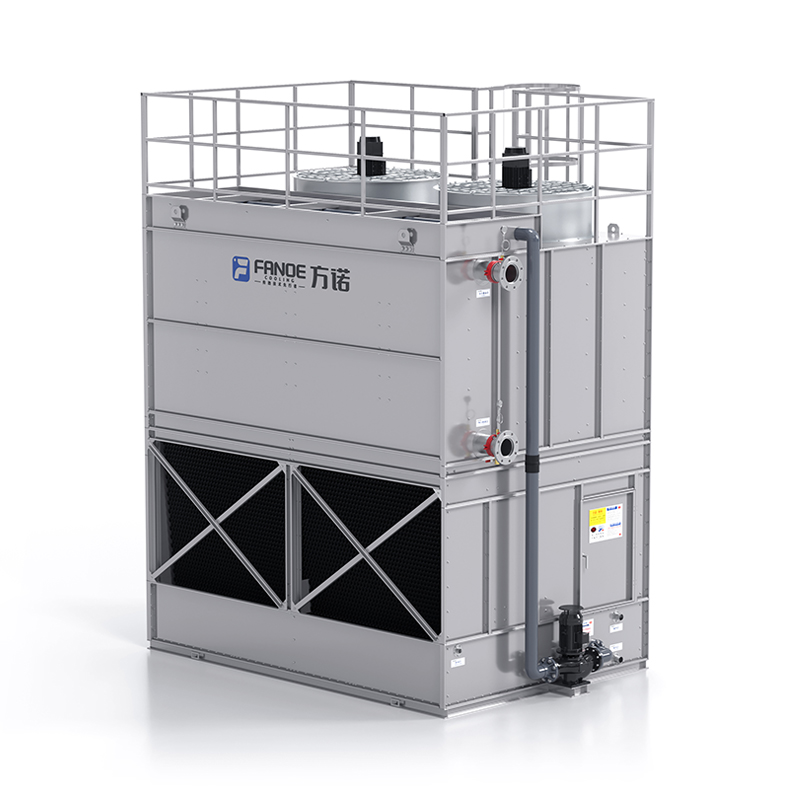

Why Fan Performance Has a Bigger Impact Than Most Operators Realize
Industrial cooling tower fans are responsible for moving the volume of air needed to evaporate water and remove heat from the cooling cycle, making them one of the most performance-critical components in the entire cooling tower sys...
Closed Cooling Towers Manufacturers
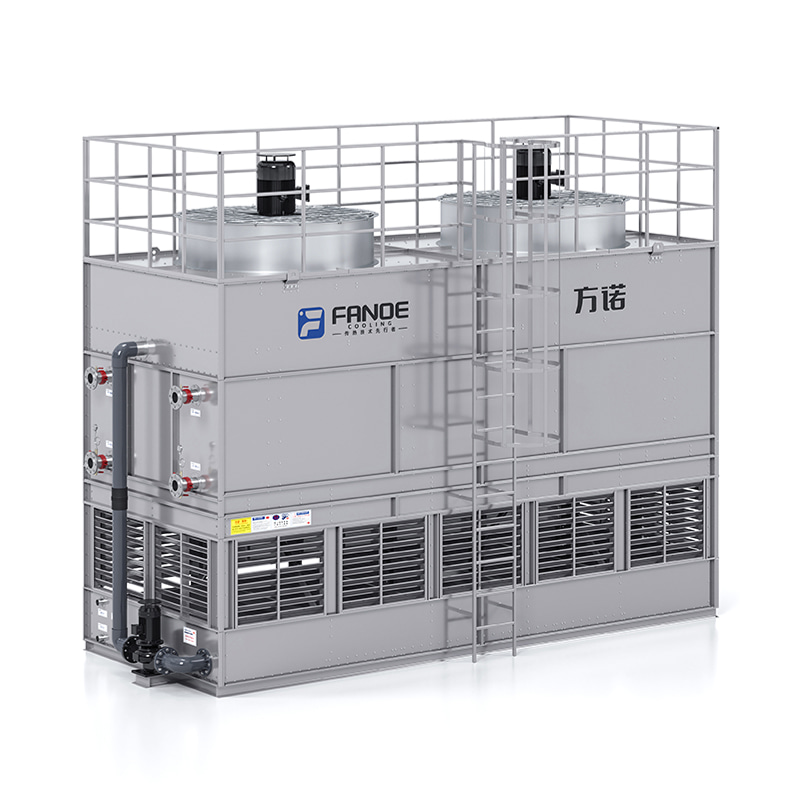
A closed cooling tower is a high-efficiency cooling device that combines water-cooled cooling with air-cooled cooling. It is suitable for scenarios with high requirements for system cleanliness, water saving and long-term operation stability, and is often used in water-scarce and dry areas. It is widely used in pharmaceutical, food, metallurgy, chemical, electric power, injection molding machine, laser equipment cooling, server liquid cooling system, ice storage system, photovoltaic, and lithium battery production line cooling. It is mainly divided into compound flow closed cooling tower and countercurrent closed cooling tower.
The core working principle of the closed cooling tower is that the cooling medium circulates in a closed coil without direct contact with the outside air, and cooling is achieved by evaporation and heat dissipation of spray water and air. The circulating water pump pumps the cooling water to the spray system, and the water is evenly sprayed on the surface of the coil from the nozzle to form a layer of water film. At the same time, the fan starts to allow air to enter from the bottom of the cooling tower and conduct reverse convection heat exchange with the water film on the surface of the coil.
On the one hand, part of the water in the water film evaporates and absorbs heat, which reduces the water temperature on the surface of the coil; on the other hand, the sensible heat exchange between the air and the water film also further reduces the water temperature. The cooled water flows back to the water collection tank at the bottom of the cooling tower and is pumped to the spray system again by the circulating water pump. This cycle repeats to cool the medium in the coil.
Closed cooling towers have the characteristics of high operating efficiency, stable water quality, good water-saving performance, and low operating noise. Although the initial investment is high, the comprehensive life cycle cost is often lower. When selecting a model, it is necessary to consider the heat load, environmental conditions, and maintenance capabilities.
ABOUT US
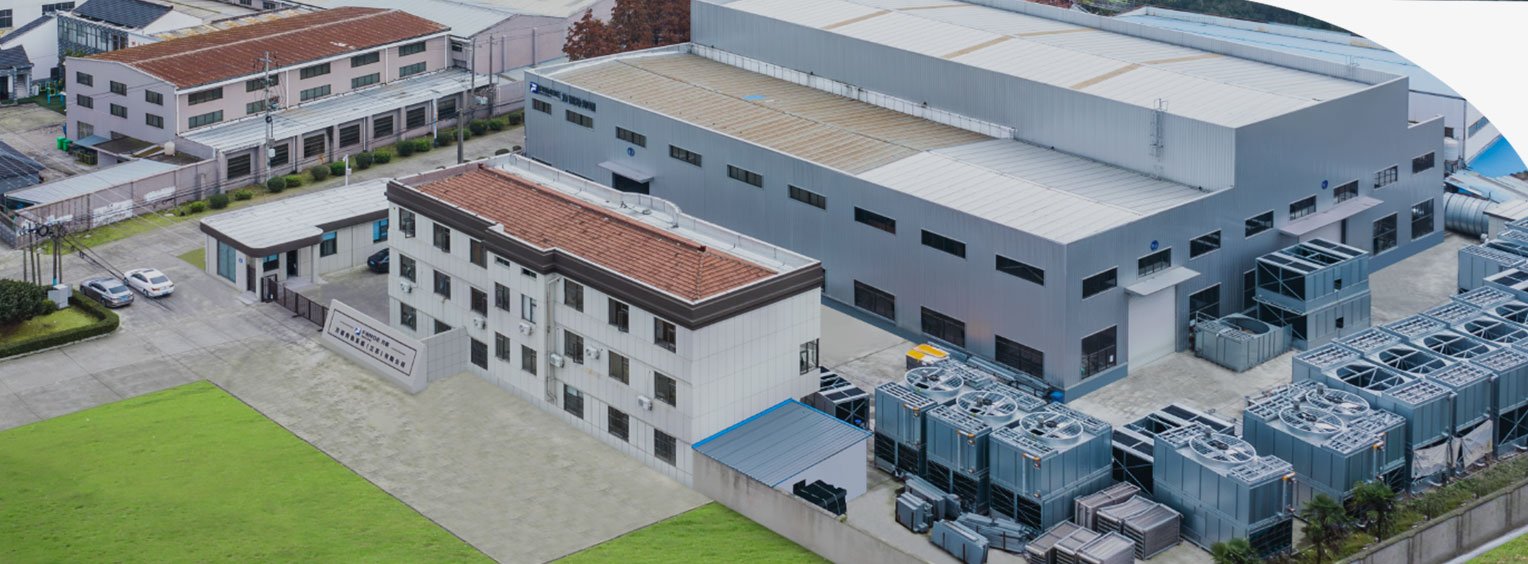
Fangnuo Heat Transfer System (Jiangsu) Co., Ltd.
Fangnuo Heat Transfer System (Jiangsu) Co., Ltd. is a mature provider of systematic solutions for circulating water cooling systems. We have self-developed selection software, professional product design, and water and electrical engineers. We offer integrated services ranging from cooling tower selection, production, and system installation to post-installation maintenance. Our main products include closed cooling towers, evaporative condensers, Wet and Dry cooling towers, and Open cooling towers, among others.
As China Closed Type Cooling Tower Manufacturers and OEM/ODM Closed Type Cooling Tower Factory, Fangnuo has a team of professionals with over 20 years of experience in refrigeration heat exchanger management, R&D, and manufacturing. In the design, production, and maintenance of cooling equipment, the staff of Fangnuo Heat Transfer adheres to the essence of the corporate culture of exploration, integrity, and meticulously serving every customer and paying close attention to every detail. Our products are widely used in industries such as medical devices, pharmaceuticals and biotechnology, food and chemical processing, photovoltaic energy, automotive casting, HVAC equipment, packaging and injection molding, steel forging, aerospace, and electronic engineering.
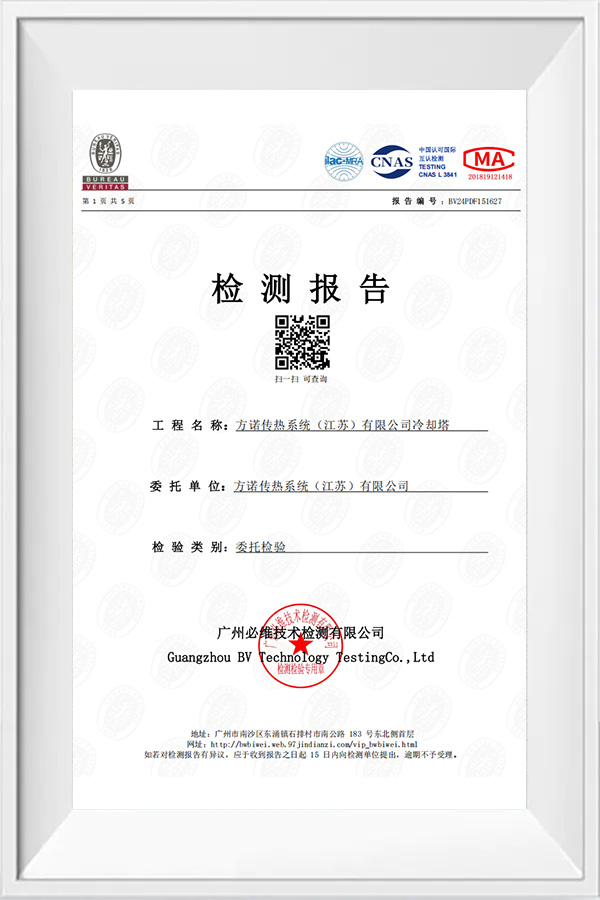
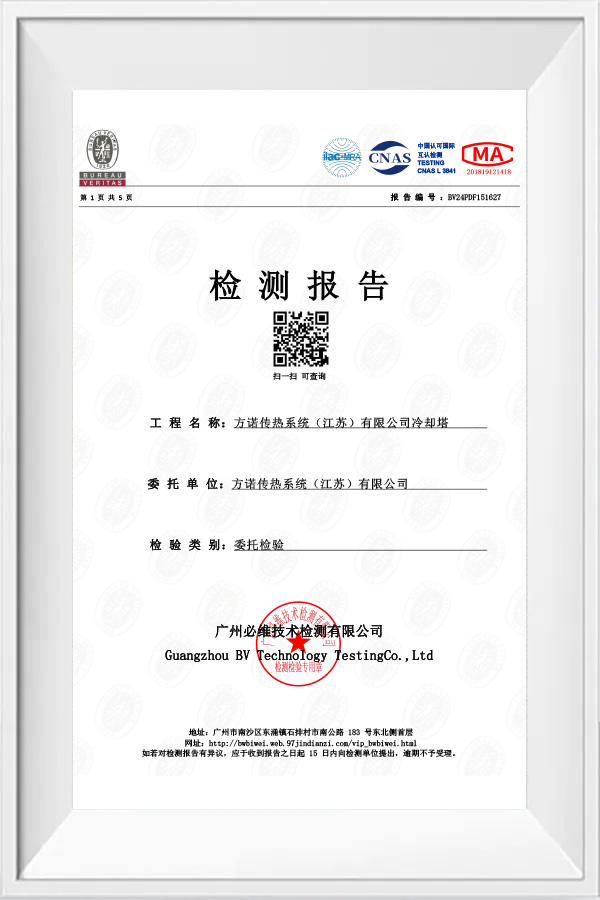
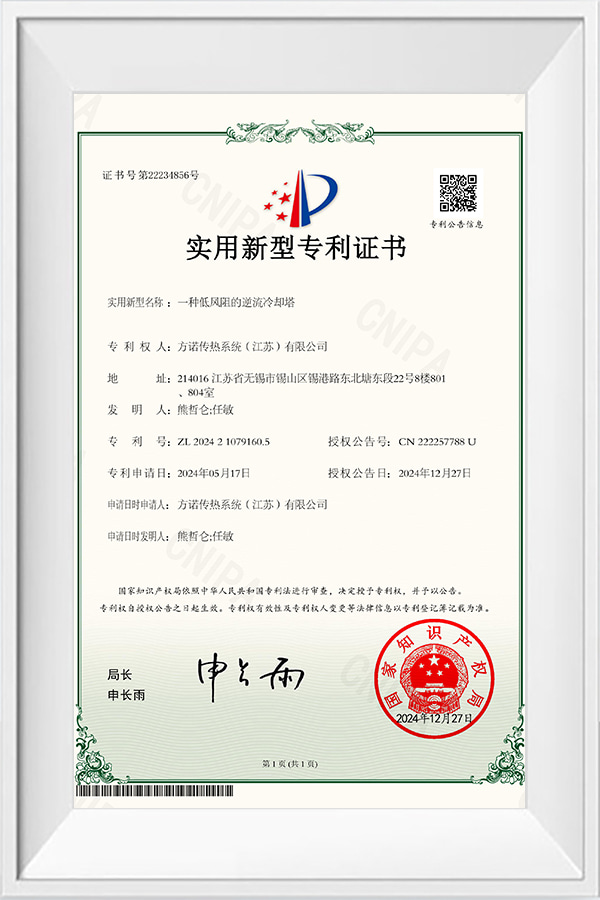
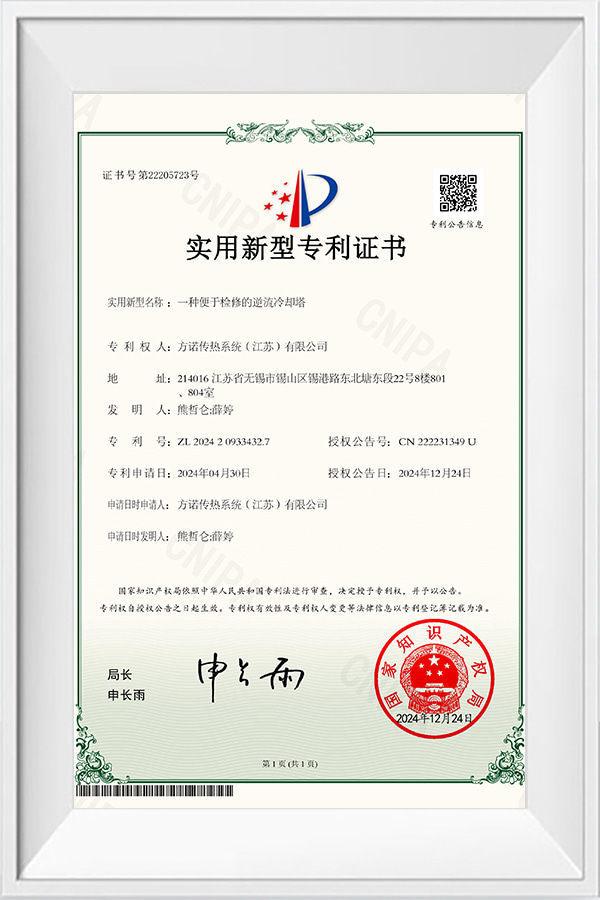
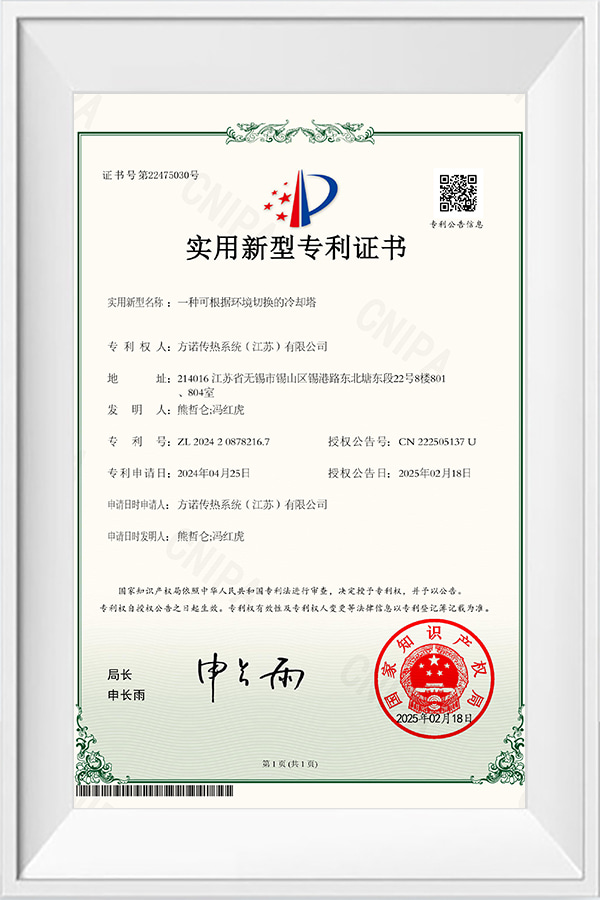
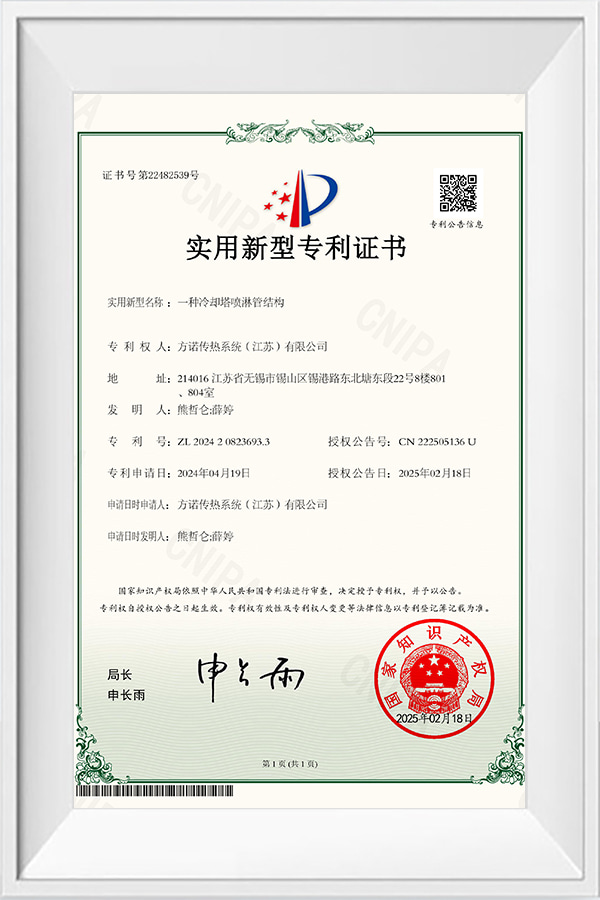
Since its establishment, Fangnuo has strictly adhered to the principles of integrity and kept improving, and has been awarded the titles of Five-star Quality and Credit Enterprise of Jiangsu Province, AAA-level Enterprise Quality Service of Jiangsu Province, Excellent Private Enterprise of Jiangsu Province, Jiangsu Province Baijia Enterprise. Our products have passed CTI, CCTI, and energy-saving and water-saving tests, and have obtained ISO9001 Quality Management System Certification, ISO14001:2015 Environmental Management System Certification, and ISO45001:2018 Occupational Health and Safety Management System Certification. We offer Custom Closed Circuit Cooling Tower.
HONORARY CERTIFICATION
CERTIFICATE
LATEST UPDATES
WHAT'S NEWS
-
 Industrial Cooling Tower Fans: What to Know Before You Replace or Upgrade Yours
 -
 Counter-current Evaporative Condenser Explained: How It Cools Better and Saves EnergyWhat Is a Counter-current Evaporative Condenser? A Counter-current Evaporative Condenser is a piece of industrial cooling equipment that rejects heat from a refrigeration or process system by combining air flow and water spray in opposite directions across the coil. As hot refrigerant gas passes thr...
 -
How a Cross-flow Evaporative Condenser Works and Why It Saves You Money on CoolingWhat a Cross-flow Evaporative Condenser Actually Does A cross-flow evaporative condenser is a heat rejection device used in refrigeration and HVAC systems that removes heat from a hot refrigerant vapor by combining two simultaneous cooling mechanisms: sensible cooling from water evaporation and late...
-
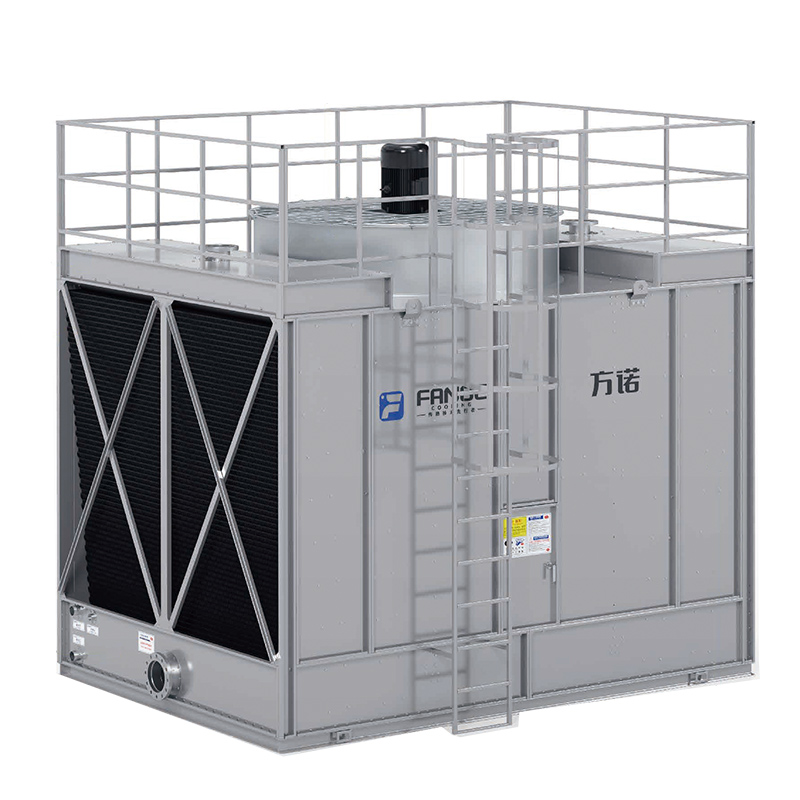 Cooling Towers Explained: How They Work, Types, and How to Pick the Right OneHow a Cooling Tower Actually Works A cooling tower is a heat rejection device that removes waste heat from a process or building system by transferring it to the atmosphere through the evaporation of water. The fundamental principle is straightforward: hot water from a chiller, industrial process, o...
INDUSTRY KNOWLEDGE
What is a Closed Cooling Tower (Closed Type Cooling Tower)?
A closed cooling tower—also called a closed circuit cooling tower or closed type cooling tower—is a heat rejection device that transfers process heat to the atmosphere without exposing the process fluid directly to ambient air. Instead of direct contact between air and process water, the process fluid circulates inside finned coils or tubes while outside air passes over the coil and a secondary water film or fill. That arrangement keeps process fluid isolated, reduces contamination risk, and simplifies fluid chemistry control for systems such as HVAC chillers, hydraulic oil coolers, and certain industrial process loops.
How a Closed Circuit Cooling Tower Works
The common closed-circuit cooling tower configuration contains a closed coil (tube bundle) carrying the hot process fluid, a recirculating spray system that wets the coil with makeup/circulating water, and an air mover (fan) that draws or pushes ambient air across the coil and wetted fill. Heat flows from the process fluid to the coil metal, then to the thin water film created by the spray; a portion of the heat is removed by sensible heat transfer and a portion by evaporation of that film. The evaporative cooling improves thermal performance while keeping the process fluid separate from atmospheric contaminants.
Key Advantages of Closed Type Cooling Towers
- Closed loop protection: Process fluids (glycols, oils, or treated water) never contact outside air, reducing fouling, oxidation, and freeze risk.
- Simpler water treatment: Only the recirculating spray water needs standard tower treatment—process fluid chemistry is easier to control.
- Lower contamination: Ideal where product purity matters (pharmaceuticals, food processing) or where airborne contaminants exist.
- Flexible fluid selection: Allows use of corrosion inhibitors, antifreeze, or specialized fluids in the closed circuit without increasing drift of those chemicals to the atmosphere.
- Reduced leakage risk to process: If the external recirculating water leaks, it does not mix with process fluid due to the closed coil barrier.
Design and Sizing Considerations
Proper selection of a closed circuit cooling tower requires attention to thermal load, approach temperature, fluid properties, ambient wet-bulb temperature, and allowable pressure drop. Designers normally specify:
- Design heat load (kW or BTU/h) and required leaving fluid temperature.
- Approach (the difference between leaving fluid temperature and ambient wet-bulb) — smaller approach requires larger tower or more airflow.
- Fluid type and viscosity — heat transfer coefficients change for oils vs. water/glycol mixtures; coils and pump sizing must match.
- Altitude and site conditions — density of air affects fan performance; dusty or saline environments influence materials selection and maintenance frequency.
Coil Configuration
Coils may be single- or multi-pass, made of copper, stainless steel, or coated steel depending on fluid chemistry and required thermal conductivity. Coil surface area and fin density are chosen to balance required heat transfer and allowable pressure drop. For viscous fluids or oils, larger tube diameters and lower velocities reduce pressure drop and maintain pump efficiency.
Materials, Corrosion and Water Quality Management
Because the process fluid is isolated from the outside, the external recirculating water becomes the main source of corrosion and biological growth for the tower structure and fill. Use corrosion-resistant materials (FRP, stainless steel, coated steel) where water chemistry or environment demands it. Maintain proper blowdown, make-up water treatment, and biocide programs to control scale, corrosion, and biofilm in the spray system and fill.
Water Treatment Checklist
- Control cycles of concentration via regular blowdown and conductivity monitoring.
- Use dispersants and scale inhibitors matched to the makeup water hardness.
- Biocide program: periodic shock plus continuous low-dose treatment to prevent Legionella and biofilms.
- Corrosion inhibitors or pH control if system materials are vulnerable.
Installation Best Practices
Locate the tower so intake air is free of obstructions and cross-contamination from exhaust air or nearby process emissions. Provide easy access for routine maintenance—coils, pumps, fans, drift eliminators, and fill should be serviceable without major disassembly. Ensure proper structural support for the filled weight when wet and install condensate/overflow drains routed to appropriate drainage or treatment.
Piping and Pumping Tips
Specify pumps that handle the closed-circuit fluid viscosity and that operate near their best efficiency point at design flow. Use flexible connectors and vibration isolation to protect coils and piping. Provide isolation valves and bypass lines for coil flushing and maintenance; include sight glasses or temperature sensors at the coil inlet/outlet for performance verification.
Maintenance Checklist & Troubleshooting
A regular preventive maintenance (PM) schedule keeps closed circuit cooling towers reliable. Typical PM tasks include visual inspection of coils and fill, fan and motor lubrication, drift eliminator cleaning, checking spray nozzles for clogging, verifying water treatment parameters, and testing pump operation. Below are common issues and actions.
- Reduced thermal performance: Check fouled nozzles, scale on coil, or biological growth in fill; perform coil cleaning or shock biocide treatment.
- High coil pressure drop: Inspect for debris inside piping or fouled heat-transfer surfaces; flush or chemical-clean the coil if necessary.
- Fan vibration or noise: Balance fan blades, check bearings, and verify fan speed matches specification—replace worn bearings or belts.
- Leaks on external circuit: Inspect spray system nozzles and piping; repair or replace gaskets and valves promptly to avoid damage to fill and structure.
Performance Comparison: Closed vs. Open Cooling Towers
| Characteristic | Closed Circuit Cooling Tower | Open (Wet) Cooling Tower |
|---|---|---|
| Process fluid exposure | No (isolated inside coil) | Yes (direct contact) |
| Water treatment complexity | Lower for process fluid; spray water still requires treatment | Higher (entire process water treated) |
| Typical uses | Sensitive fluids, oils, glycol loops, hygienic processes | Large-scale power and industrial cooling where direct exchange is acceptable |
| Approach temperatures | Comparable but can require slightly larger area for equal approach due to coil thermal resistance | Efficient for very large heat loads; direct contact maximizes heat transfer per footprint |
Selection Checklist Before Purchase
- Confirm design heat duty (kW or BTU/h) and required leaving temperature.
- Specify fluid properties (type, viscosity, allowable pressure drop).
- Identify site ambient wet-bulb conditions and possible airborne contaminants.
- Choose coil material compatible with process fluid and expected lifetime.
- Plan for maintenance access, spare parts, and a water treatment provider if necessary.
A closed circuit cooling tower delivers the advantages of evaporative cooling while protecting process fluids from external contamination. For best long-term performance, focus on correct sizing, appropriate materials, and a disciplined water and mechanical maintenance program. If you’d like, I can produce a simple calculation worksheet (heat load → required flow and approach) or a maintenance checklist PDF based on your exact process fluid and site wet-bulb temperature.

PRODUCT LIST
SERVICES & SUPPORT
CONTACT INFO.
-
 +86-153 7026 2058
-
 +86-0510-8823 2283
-
 [email protected]
-
 No. 22, East Section of Dongbeitang, Xigang Road, Xishan District, Wuxi City, Jiangsu, China
Copyright © 2025 Fangnuo Heat Transfer System (Jiangsu) Co., Ltd. All rights reserved.