


 Eng
Eng English
 中文简体
中文简体
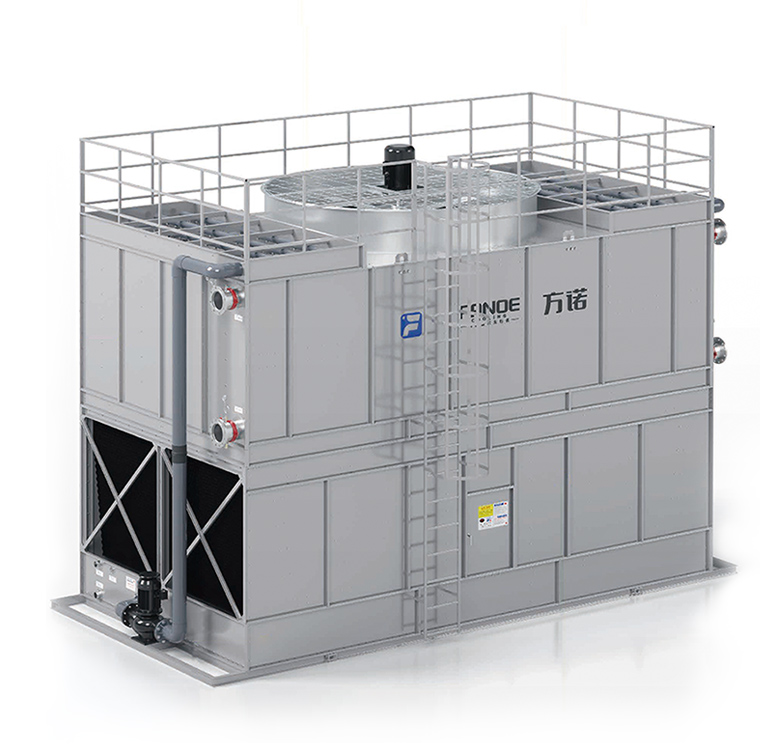
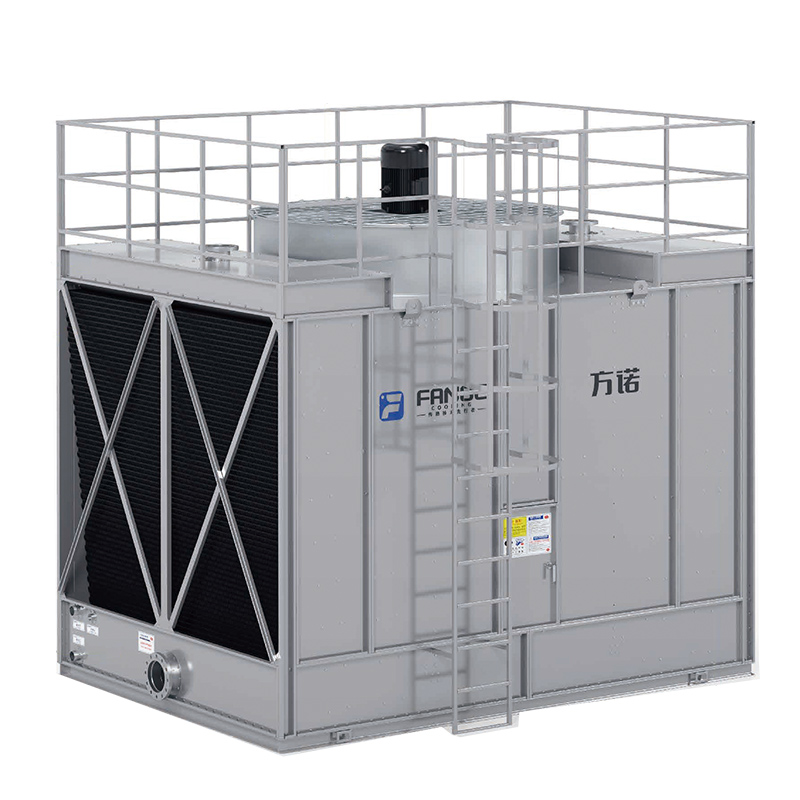
A closed cooling tower is a high-efficiency cooling device that combines water-cooled cooling with air-cooled cooling. It is suitable for scenarios with high requirements for system cleanliness, water saving and long-term operation stability, and is often used in water-scarce and dry areas. It is widely used in pharmaceutical, food, metallurgy, chemical, electric power, injection molding machine, laser equipment cooling, server liquid cooling system, ice storage system, photovoltaic, and lithium battery production line cooling. It is mainly divided into compound flow closed cooling tower and countercurrent closed cooling tower.
The core working principle of the closed cooling tower is that the cooling medium circulates in a closed coil without direct contact with the outside air, and cooling is achieved by evaporation and heat dissipation of spray water and air. The circulating water pump pumps the cooling water to the spray system, and the water is evenly sprayed on the surface of the coil from the nozzle to form a layer of water film. At the same time, the fan starts to allow air to enter from the bottom of the cooling tower and conduct reverse convection heat exchange with the water film on the surface of the coil.
On the one hand, part of the water in the water film evaporates and absorbs heat, which reduces the water temperature on the surface of the coil; on the other hand, the sensible heat exchange between the air and the water film also further reduces the water temperature. The cooled water flows back to the water collection tank at the bottom of the cooling tower and is pumped to the spray system again by the circulating water pump. This cycle repeats to cool the medium in the coil.Closed cooling towers have the characteristics of high operating efficiency, stable water quality, good water-saving performance, and low operating noise. Although the initial investment is high, the comprehensive life cycle cost is often lower. When selecting a model, it is necessary to consider the heat load, environmental conditions, and maintenance capabilities.
VIEW MORE
Home / Products
Industrial Cooling Towers Factory
-
Closed Cooling Tower
-
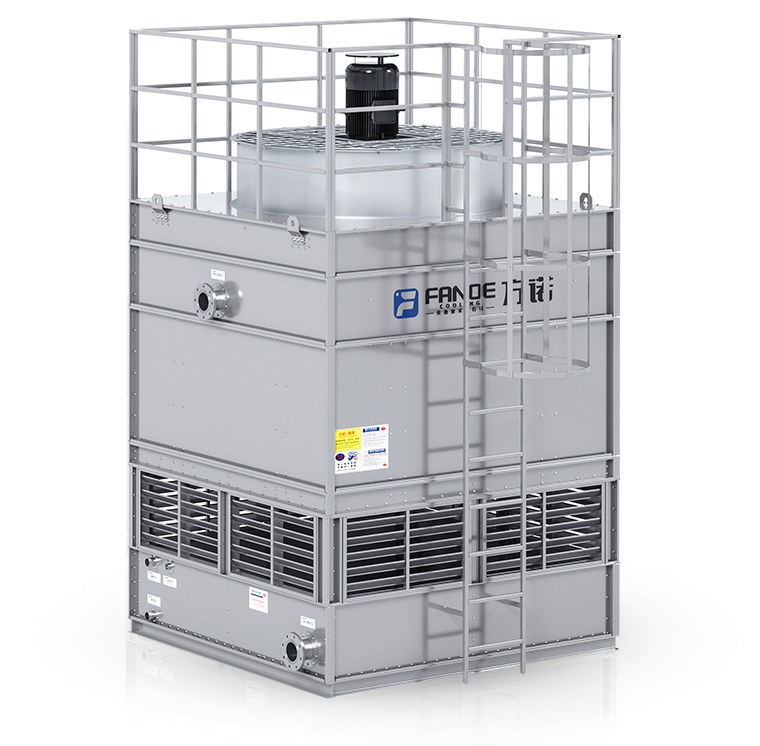
Open Cooling TowerAn open cooling tower is a place where cooling water is in direct contact with air, and the temperature is reduced by evaporative heat dissipation and sensible heat exchange. It is widely used in the fields of electricity, chemical industry, air conditioning and refrigeration, and is divided into: cross-flow open cooling tower and counter-flow open cooling tower.Working principle of open cooling tower: high-temperature cooling water is evenly sprayed from the top of the tower through nozzles or water distribution systems, and air enters the tower by forced ventilation or natural convection from the fan, and contacts with falling water droplets or fillers. Part of the water evaporates, taking away a lot of heat, and the air temperature rises, absorbing part of the heat of the water. The cooled water is collected in the bottom pool and recycled. Advantages of open cooling tower:Low initial investment: simple structure, lower manufacturing cost than closed tower;High cooling efficiency: direct contact heat exchange, especially suitable for cooling with large temperature difference;Easy maintenance: fillers can be disassembled and cleaned, and faults are easy to troubleshoot. Disadvantages of open cooling towers:The fan motor and blades are exposed to the air, making a lot of noise during operation;Water loss, some water droplets are carried away by the air, and the water collector needs to be optimized;The entry of external debris will also cause water pollution;The cooling water pressure loss is higher than that of closed cooling towers, and more pump power is required to maintain water circulation.Open cooling towers are suitable for occasions with large cooling water volume and convenient water quality management. When choosing, factors such as cost, energy consumption, and maintenance should be considered comprehensively.VIEW MORE
-
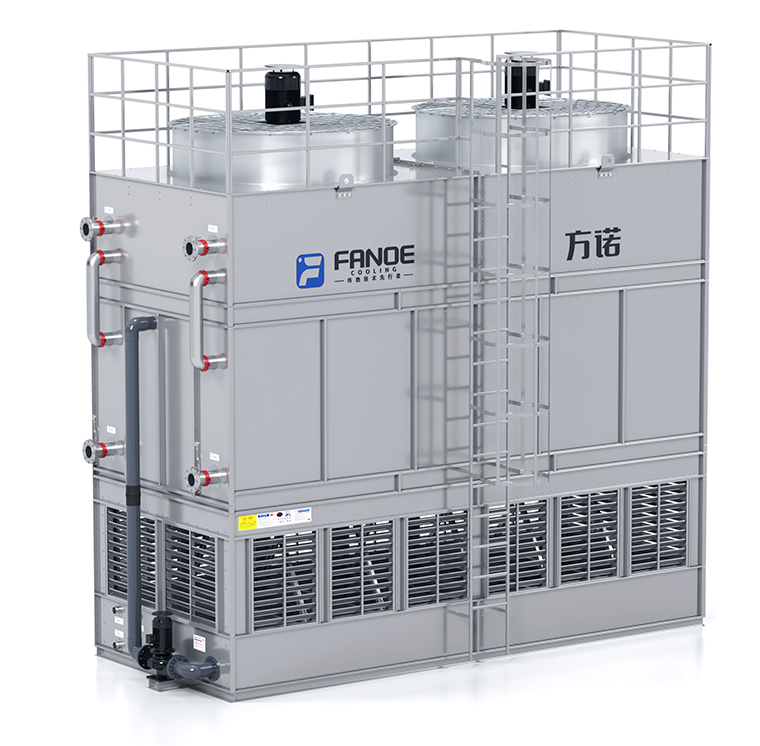
Dry and Wet Combined Cooling TowerThere are two modes of dry and wet cooling towers: dry and cold operation and wet and cold operation. When the ambient temperature is ≤ the designed stop spraying temperature, the spray water can be turned off, and the cooling needs can be met entirely by convection heat exchange with the air. Dry-cooling operation does not consume water, so white fog is avoided. Dry-cooling operation can save a lot of water and water treatment costs every year. Widely used: thermal power generation, nuclear power generation, petrochemical, fine chemical, steel metallurgy, non-ferrous metal metallurgy and other fields. The dry and wet combined cooling tower the advantages of dry cooling and wet cooling, and its working principle is as follows: Dry cooling principle: Hot water enters the cooling tube bundle of the dry cooling part. Usually, the cooling tube bundle uses high-efficiency heat transfer elements such as finned tubes to increase the heat transfer area. Under the action of the fan, external air flows through the outer surface of the cooling tube bundle. Since the hot water temperature in the pipe is higher than the air temperature outside the pipe, there is a temperature difference between the two. Heat is transferred from the hot water to the air through the pipe wall in a sensible heat exchange manner, which reduces the hot water temperature and increases the air temperature. The heated air is discharged from the tower by the fan, thereby achieving initial cooling of the hot water. The principle of wet cooling: The hot water after dry cooling enters the wet cooling part. Hot water is sprayed evenly on the water-dripping filler through the water distribution system to form a water film. The air entering from the lower part of the cooling tower is in full contact with the water film on the filler during upward flow. On the one hand, air directly contacts heat transfer with water, reducing the temperature of the water; on the other hand, part of the water evaporates into water vapor and enters the air, absorbing the latent heat of vaporization during the evaporation process, further reducing the temperature of the water. The cooled water is collected into the collecting pool and recycled. At the same time, in order to reduce the loss of water droplets and the impact on the environment brought out by the air flow, a water collector and a mist demister are usually provided on the upper part of the wet cooling section. The water collector is used to collect water droplets, and the mist demister is used to remove water mist in the air flow. Advantages of dry and wet cooling tower: Significant water saving: zero evaporation loss during dry segment operation, saving 30% to 70% water than pure wet tower; Flexible adaptation: Switch wet mode in high temperature and high humidity environments to ensure cooling efficiency; Environmental compliance: reduce drift and white mist (steam plume), suitable for strictly environmentally friendly areas; Low maintenance cost: Dry section reduces scale and corrosion and extends equipment life.VIEW MORE
-
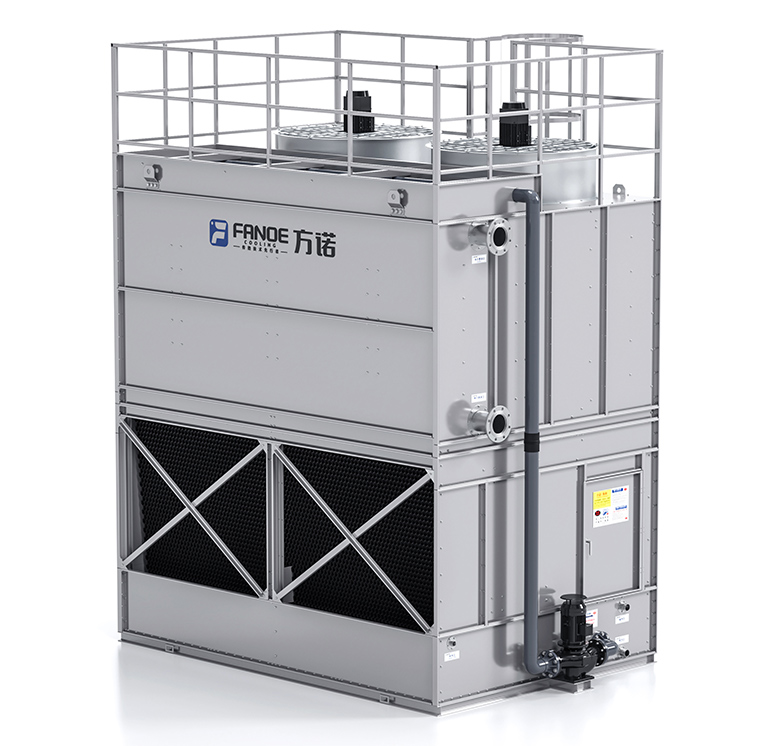
Evaporative CondenserThe operating principle of the evaporative condenser is similar to that of a conventional closed cooling tower. The difference is that the conventional closed cooling tower inlet heat medium and the tower outlet cooling medium are both liquid and have only temperature changes, while the evaporation condenser inlet heat medium is gaseous and after the tower outlet is discharged, the medium is condensed into liquid. Evaporation condensers are products that combine cooling towers and condensers. Advantages of evaporative condenser: High-efficiency condensation: evaporative cooling is used to reduce the condensation temperature by 10% to 30%. Water saving and electricity saving: Save 30% to 50% water saving than traditional water cooling tower + shell and tube condenser, saving the energy consumption of the cooling tower. Compact design: Integrated condensation + cooling function to reduce footprint. Strong adaptability: suitable for high-temperature and arid areas (relying on wet bulb temperature rather than dry bulb temperature) Advantages of Fangnuo evaporative condenser: ● Parallel air flow and water flow minimize the appearance of "dry points" at the bottom of the cooling pipe that cause scaling; ● The coil section dissipates heat by evaporative cooling induced by the flowing fresh air, and on the other hand, it dissipates heat by heat transfer cooling of the spray water. Reducing the evaporative cooling portion of the coil section helps to reduce the possibility of scaling on the surface of the coil; ● Spray water with a min. flow rate of 6.8L/S/㎡ is evenly distributed to the surface of the coil through the spray system to ensure that the surface of the cooler coil remains continuously wet, thereby improving the heat conduction efficiency and reducing the scale to a minimum; ● The spray water falls from the cooling coil to the heat exchange layer of the PVC filler, and is cooled on the PVC filler with the second stream of fresh air entering the tower through evaporation and heat conduction (latent heat and sensible heat), so that the spray water is cooled secondaryly and the spray water temperature is further reduced; ● The secondary cooling circulating water increases the temperature difference between the spray water and the process hot fluid, increases the heat exchange efficiency of the cooling coil, and reduces the number of coils required. This characteristic further alleviates the tendency of scaling on the surface of the coil, because the lower the spray water temperature, the less likely it is to scale. In addition, due to the small number of coils used, the cost of replacing coils in the later stage is reduced and the maintenance cost is lower; ● The operating cost is low, and it is more energy-saving than conventional cooling cycles; ● The circulation system is simpler and reduces the installation cost of the circulation system; ● It saves more equipment installation space than conventional cooling circulation systems.VIEW MORE
-
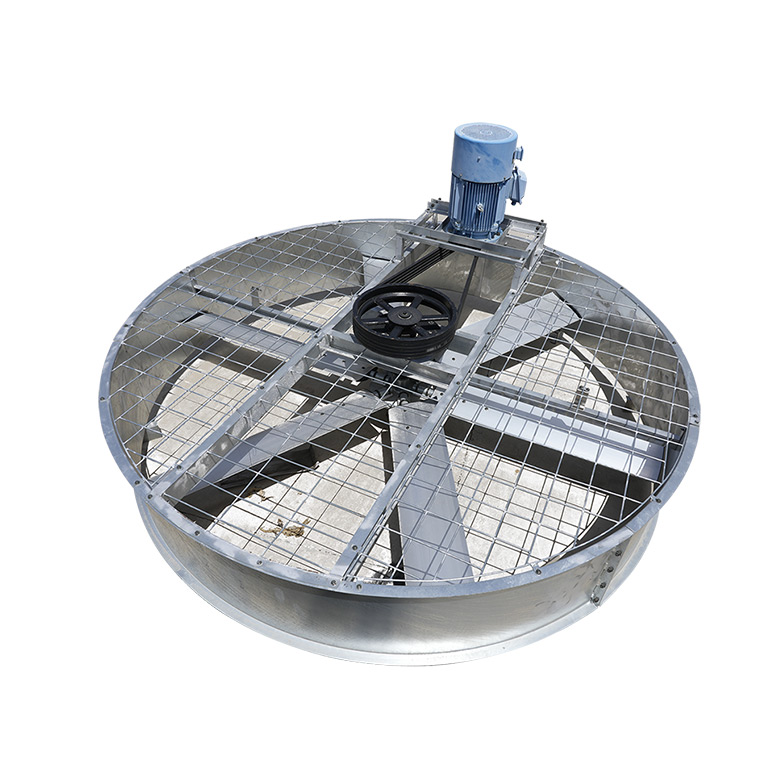
AccessoriesThe fan is the core component of industrial cooling towers, mainly used for forced ventilation, promoting heat exchange between air and circulating water to improve cooling efficiency. Its performance directly affects the energy consumption, noise, and cooling effect of the cooling tower.VIEW MORE
ABOUT US
Fangnuo Heat
Transfer System (Jiangsu) Co., Ltd.
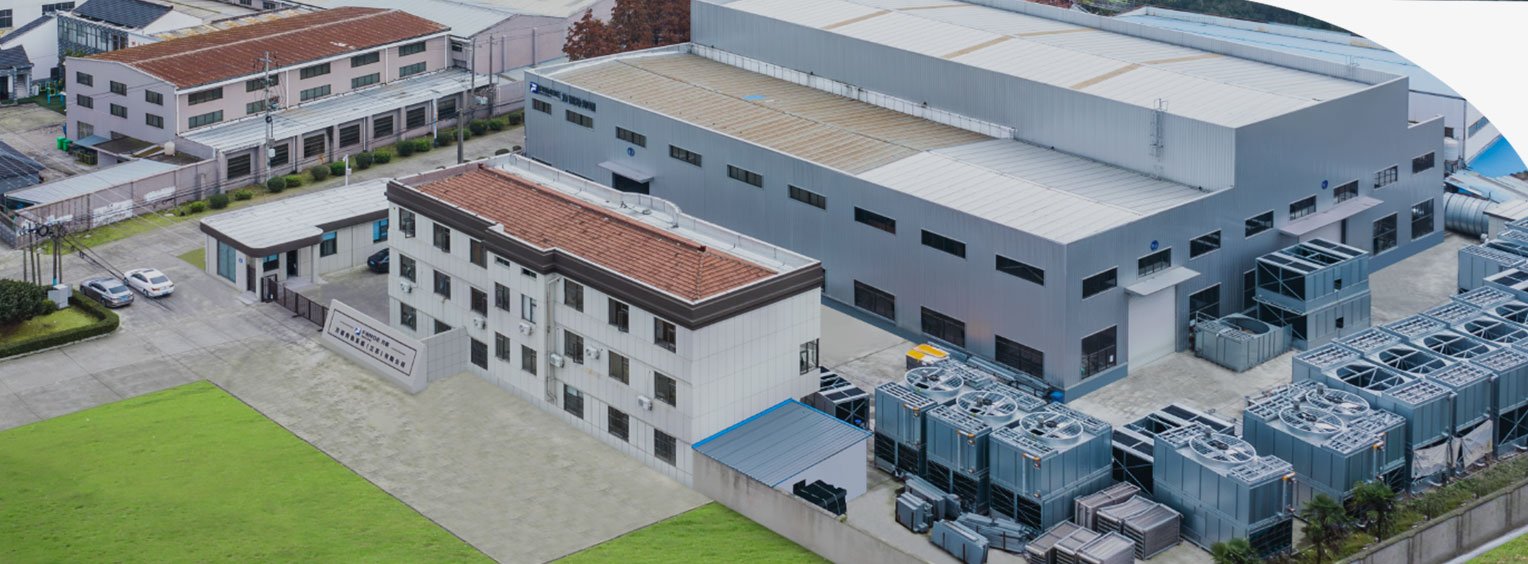
Fangnuo Heat Transfer System (Jiangsu) Co., Ltd. is a mature provider of systematic solutions for circulating water cooling systems. We have self-developed selection software, professional product design, and water and electrical engineers. We offer integrated services ranging from cooling tower selection, production, and system installation to post-installation maintenance. Our main products include closed cooling towers, evaporative condensers, Wet and Dry cooling towers, and Open cooling towers, among others.
As China Industrial Cooling Towers Factory and Steel Cooling Tower Company, Fangnuo has a team of professionals with over 20 years of experience in refrigeration heat exchanger management, R&D, and manufacturing. In the design, production, and maintenance of cooling equipment, the staff of Fangnuo Heat Transfer adheres to the essence of the corporate culture of exploration, integrity, and meticulously serving every customer and paying close attention to every detail. Our products are widely used in industries such as medical devices, pharmaceuticals and biotechnology, food and chemical processing, photovoltaic energy, automotive casting, HVAC equipment, packaging and injection molding, steel forging, aerospace, and electronic engineering.
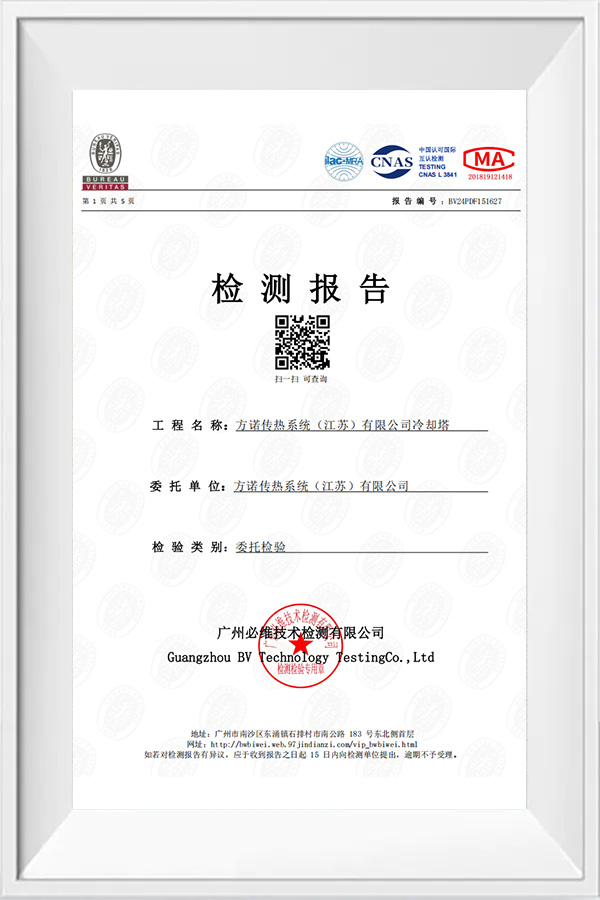
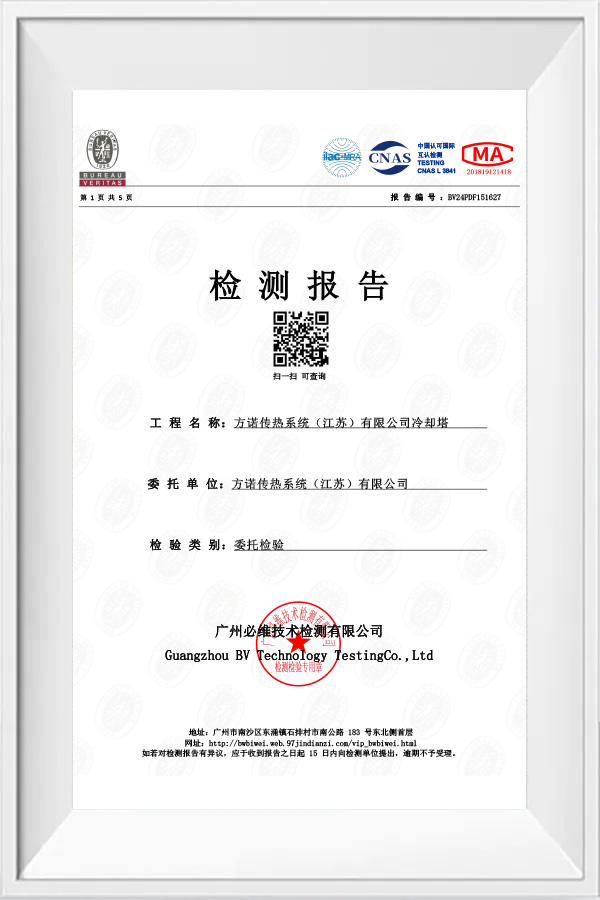
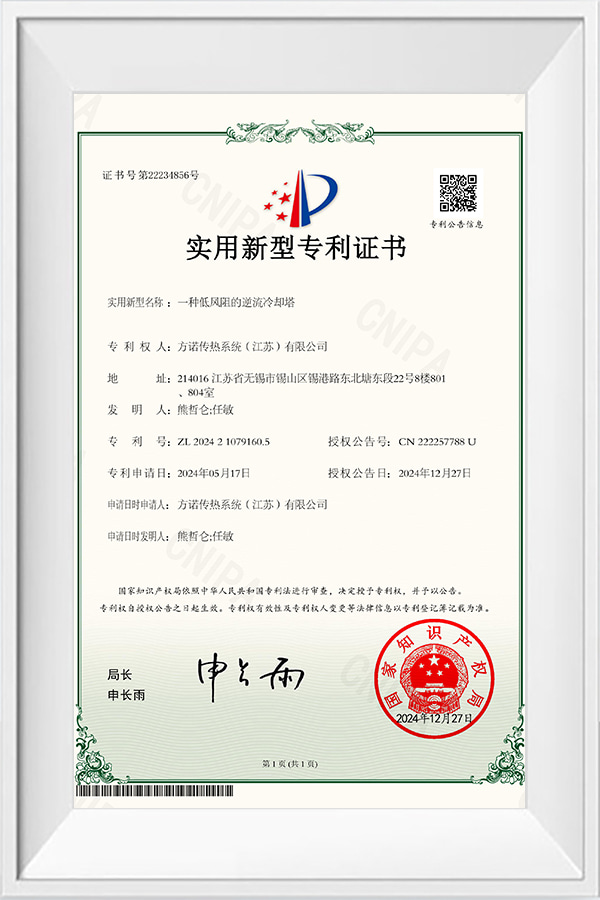
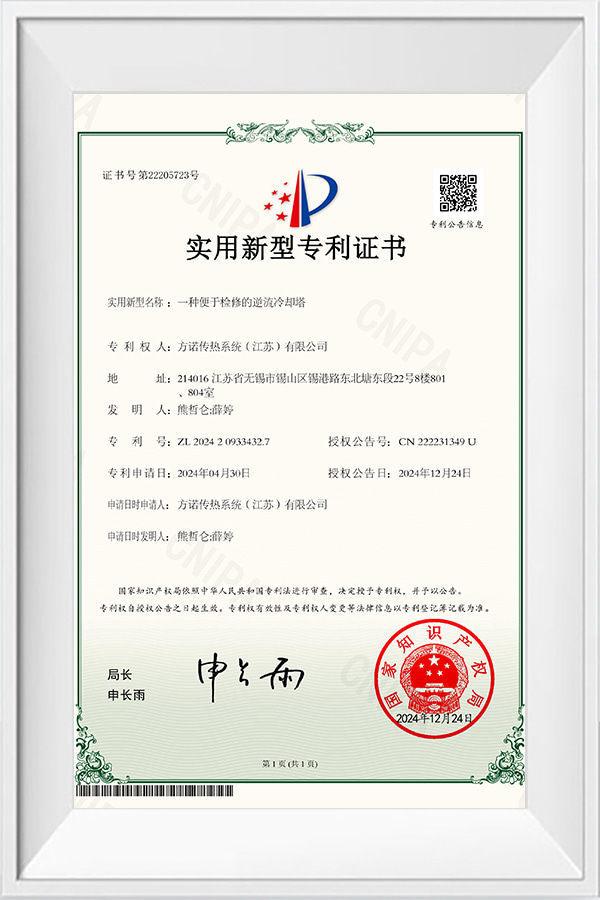
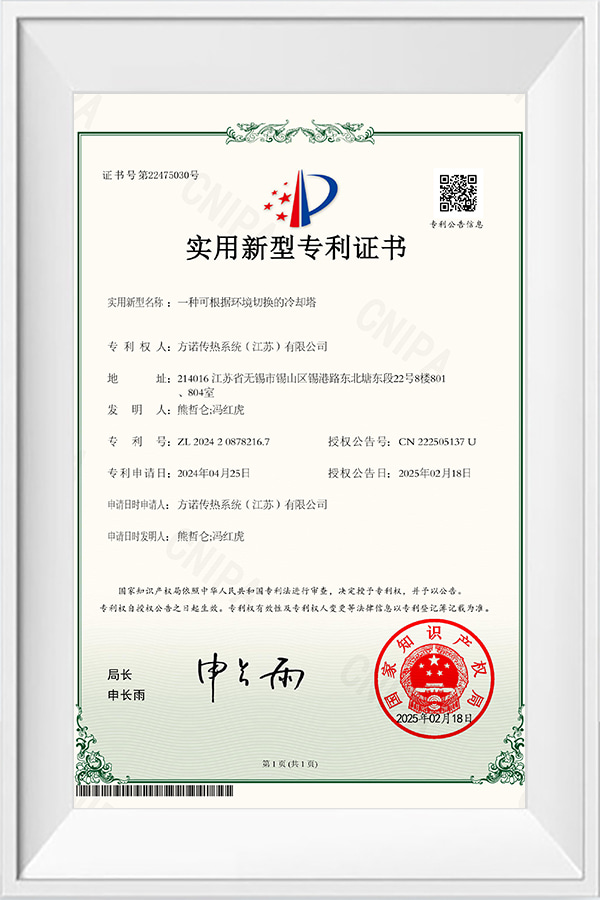
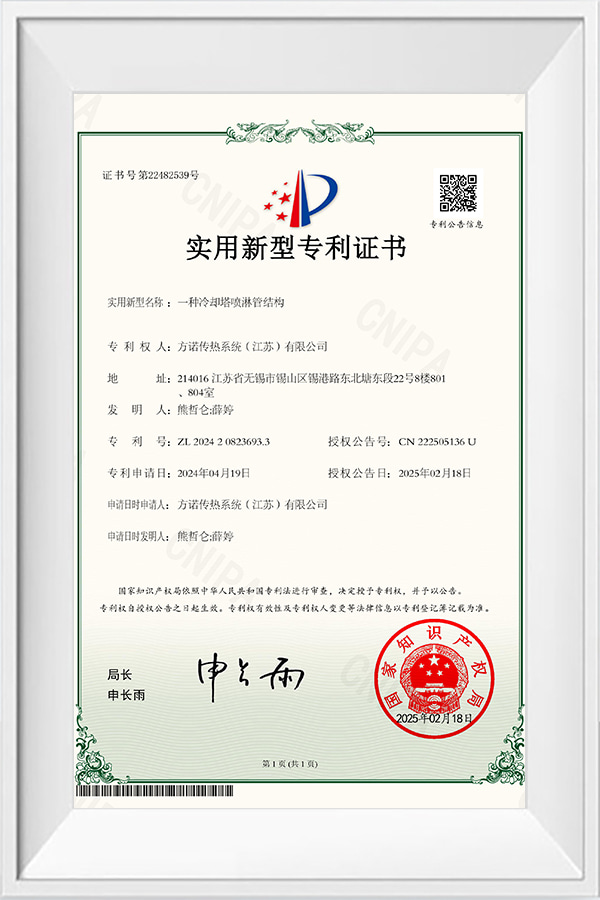
Since its establishment, Fangnuo has strictly adhered to the principles of integrity and kept improving, and has been awarded the titles of Five-star Quality and Credit Enterprise of Jiangsu Province, AAA-level Enterprise Quality Service of Jiangsu Province, Excellent Private Enterprise of Jiangsu Province, Jiangsu Province Baijia Enterprise. Our products have passed CTI, CCTI, and energy-saving and water-saving tests, and have obtained ISO9001 Quality Management System Certification, ISO14001:2015 Environmental Management System Certification, and ISO45001:2018 Occupational Health and Safety Management System Certification.
HONORARY CERTIFICATION
CERTIFICATE
LATEST UPDATES
WHAT'S NEWS
-
 Industrial Cooling Tower Fans: What to Know Before You Replace or Upgrade YoursWhy Fan Performance Has a Bigger Impact Than Most Operators Realize Industrial cooling tower fans are responsible for moving the volume of air needed ...
 -
 Counter-current Evaporative Condenser Explained: How It Cools Better and Saves EnergyWhat Is a Counter-current Evaporative Condenser? A Counter-current Evaporative Condenser is a piece of industrial cooling equipment that rejects heat ...
 -
How a Cross-flow Evaporative Condenser Works and Why It Saves You Money on CoolingWhat a Cross-flow Evaporative Condenser Actually Does A cross-flow evaporative condenser is a heat rejection device used in refrigeration and HVAC sys...
-
 Cooling Towers Explained: How They Work, Types, and How to Pick the Right OneHow a Cooling Tower Actually Works A cooling tower is a heat rejection device that removes waste heat from a process or building system by transferrin...
 -
 What Is an Open Circuit Cooling Tower and How Does It Work?An open circuit cooling tower is one of the most common and cost-effective solutions for industrial and commercial heat rejection. If you're evaluatin...
INDUSTRY KNOWLEDGE
Understanding the Working Principle of Industrial Cooling Towers
Industrial cooling towers play a critical role in managing heat in large-scale industrial operations. By transferring excess heat from water or process fluids into the atmosphere, they ensure that machinery, chemical processes, and HVAC systems operate efficiently and reliably. A deeper understanding of their working principle is essential for engineers, facility managers, and industrial planners who aim to optimize cooling performance while minimizing energy and water consumption.
1. Basic Principle of Heat Exchange
The fundamental function of a cooling tower is to remove heat from circulating water or other liquids used in industrial processes. Warm water from machinery, condensers, or process equipment is pumped into the cooling tower, where it is exposed to airflow—either by natural convection or forced ventilation using fans. The heat from the water transfers to the air through a combination of evaporation and sensible heat exchange, which lowers the water temperature. The cooled water is then recirculated back into the system.
In a steel cooling tower, the structure and heat exchange components are made from durable steel materials, providing superior strength, corrosion resistance, and longevity compared to conventional materials. This makes steel cooling towers especially suitable for high-temperature, large-capacity industrial environments, where structural integrity under continuous operation is critical.
2. Evaporation as a Core Mechanism
Evaporation is the primary mechanism for heat rejection in an industrial cooling tower. When a small portion of the circulating water evaporates into the passing air, it absorbs latent heat from the remaining water, effectively reducing its temperature. This dual-phase transfer—liquid water losing heat to air through both temperature change and evaporation—makes cooling towers highly energy-efficient compared to closed-loop water chillers or direct heat exchangers.
Fangnuo Heat Transfer System (Jiangsu) Co., Ltd. emphasizes optimizing this evaporative process through advanced air and water distribution systems. Uniform water spraying over the heat exchange media ensures maximum contact with airflow, preventing dry spots and maintaining consistent cooling efficiency.
3. Components That Affect Cooling Efficiency
A typical industrial cooling tower consists of several components that directly influence its thermal performance:
Fans: Fans, either axial or centrifugal, force or guide airflow through the tower. Their design impacts the volume of air moved, energy consumption, and noise levels. Fangnuo engineers focus on high-efficiency fan designs that balance optimal airflow with reduced power use and quieter operation.
Fill Media: Fill materials increase the surface area of water exposed to air, enhancing heat transfer. In steel cooling towers, robust and corrosion-resistant fill media ensures stable performance over extended operational periods.
Distribution System: Proper water distribution over the fill is crucial. Inconsistent coverage can reduce cooling efficiency and increase maintenance issues. Fangnuo designs precise spray systems that evenly wet the fill, reducing scaling and improving thermal performance.
Drift Eliminators: These minimize water droplets carried out of the tower with the airflow, saving water and preventing environmental impact.
4. Industrial Applications and Advantages
Industrial cooling towers are integral to various sectors, including steel manufacturing, chemical processing, pharmaceuticals, HVAC systems, and power generation. In steel plants, for example, steel cooling towers are preferred due to their ability to withstand high temperatures and corrosive environments. Efficient heat rejection ensures that process water remains at safe temperatures, preventing overheating of furnaces, molds, and rolling equipment.
Fangnuo’s industrial cooling tower solutions are widely adopted in energy-intensive industries. Their combination of robust design, material optimization, and precise system integration enables long-term operational stability, energy savings, and minimal maintenance requirements.
5. System Optimization and Maintenance
The performance of an industrial cooling tower is not only determined by its design but also by how it is operated and maintained. Regular inspection of fans, pumps, and fill media, along with water treatment to prevent scaling and biological growth, ensures consistent cooling performance.
Fangnuo integrates system-level insights with proprietary selection software to match cooling tower capacity, fan size, and water distribution patterns to specific industrial needs. This approach maximizes heat transfer efficiency while reducing water and energy consumption, creating a sustainable and cost-effective solution for industrial clients.
6. Key Considerations for Steel Cooling Towers
Steel cooling towers, a key variant of industrial cooling towers, are engineered to withstand harsh operating conditions. Selecting the right steel grade, ensuring proper corrosion protection, and optimizing airflow paths are essential for achieving maximum efficiency. Fangnuo’s design expertise ensures that steel cooling towers not only provide reliable cooling but also maintain structural integrity over decades of operation.
Conclusion
Understanding the working principle of industrial cooling towers provides insight into how heat is efficiently removed from large-scale industrial processes. By combining evaporative cooling, airflow management, and durable construction, cooling towers ensure the safe and effective operation of critical systems.
Fangnuo Heat Transfer System (Jiangsu) Co., Ltd. brings over 20 years of expertise in industrial cooling tower design and manufacturing, delivering high-efficiency solutions including steel cooling towers for demanding industrial applications. Through advanced engineering, precise system integration, and ongoing maintenance support, Fangnuo helps industries achieve reliable cooling performance, energy savings, and operational excellence.

PRODUCT LIST
SERVICES & SUPPORT
CONTACT INFO.
-
 +86-153 7026 2058
-
 +86-0510-8823 2283
-
 [email protected]
-
 No. 22, East Section of Dongbeitang, Xigang Road, Xishan District, Wuxi City, Jiangsu, China
Copyright © 2025 Fangnuo Heat Transfer System (Jiangsu) Co., Ltd. All rights reserved.