What Is a Counter-current Evaporative Condenser?
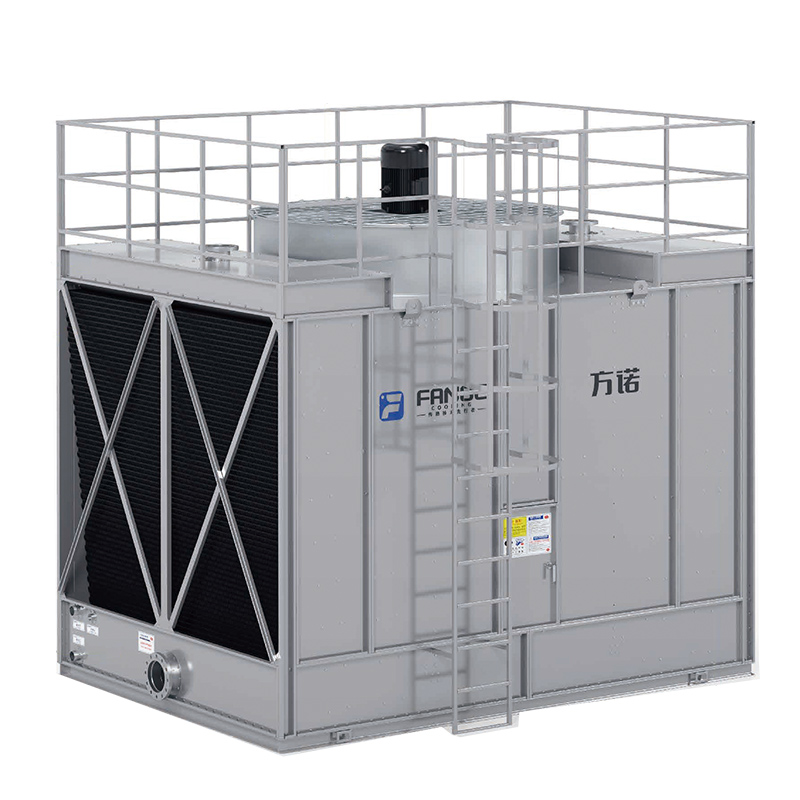
A Counter-current Evaporative Condenser is a piece of industrial cooling equipment that rejects heat from a refrigeration or process system by combining air flow and water spray in opposite directions across the coil. As hot refrigerant gas passes through the condenser coil, water is sprayed downward over the coil surface while air is drawn upward through it, creating a counter-current flow pattern that maximizes the contact time between air and water for more efficient evaporative cooling.
This design is widely used in industrial refrigeration, food processing plants, cold storage facilities, and large HVAC systems where rejecting large amounts of heat efficiently and with minimal water consumption is a priority. Compared to air-cooled condensers, a Counter-current Evaporative Condenser achieves lower condensing temperatures, which directly improves overall system efficiency and reduces compressor energy consumption.
How the Counter-current Flow Design Improves Heat Rejection
The defining feature of this condenser type is the direction in which air and water move relative to each other. Understanding why this matters helps explain why counter-current designs consistently outperform cross-flow or parallel-flow alternatives in terms of thermal efficiency.
Why Opposite Flow Directions Matter
In a counter-current arrangement, the coolest water meets the driest, coolest air at the bottom of the unit, while the warmest water meets the most humid, warmest air near the top. This creates a more favorable temperature and humidity gradient throughout the entire heat exchange process, allowing the water to absorb more heat from the refrigerant coil than it could in a design where air and water travel in the same direction or cross paths only briefly.
Lower Approach Temperatures
Because of this improved heat exchange efficiency, a Counter-current Evaporative Condenser typically achieves a lower approach temperature, meaning the difference between the condensing temperature and the ambient wet bulb temperature stays smaller. A lower approach temperature translates directly into a lower condensing pressure for the refrigeration system, which reduces the energy the compressor needs to do its job.
Main Components Inside a Counter-current Evaporative Condenser
Several key components work together inside the unit to achieve consistent, efficient heat rejection across varying load and weather conditions.
- Refrigerant coil: carries hot refrigerant gas through the unit where heat transfer to the water and air takes place
- Spray water distribution system: evenly distributes recirculated water over the coil to maximize surface contact
- Fill media: increases air-to-water contact area and contact time within the unit, boosting evaporation efficiency
- Fan and motor assembly: pulls or pushes air through the unit, typically arranged to draw air upward against the falling water
- Drift eliminators: capture water droplets carried by the airstream before they exit the unit, reducing water loss and chemical drift
- Basin and recirculation pump: collects water at the bottom of the unit and pumps it back up to the spray distribution system
Comparing Counter-current Evaporative Condensers to Other Heat Rejection Methods
Facility engineers often compare evaporative condensers against air-cooled condensers and standard cooling towers paired with separate condensers when selecting heat rejection equipment for a new project.
| Heat Rejection Method |
Energy Efficiency |
Water Usage |
Footprint |
| Air-Cooled Condenser |
Lower |
None |
Larger |
| Counter-current Evaporative Condenser |
Higher |
Moderate |
Compact |
| Cooling Tower with Separate Condenser |
Moderate |
Higher |
Larger |
The combined condensing and cooling function built into a Counter-current Evaporative Condenser is one of its biggest practical advantages, since it eliminates the need for a separate cooling tower and intermediate water loop, simplifying piping, reducing pump energy use, and shrinking the overall mechanical room footprint.

Common Applications Across Industries
Counter-current Evaporative Condensers are most commonly found in applications where industrial refrigeration systems need to reject large heat loads efficiently while keeping equipment footprint and energy costs under control.
- Cold storage warehouses and distribution centers requiring consistent, energy-efficient refrigeration capacity
- Food and beverage processing plants where ammonia-based refrigeration systems are common
- Ice rinks and large-scale ice production facilities that depend on efficient heat rejection year-round
- Industrial process cooling applications in chemical and petrochemical plants
- Large commercial HVAC systems serving sports arenas, hospitals, and other high-load buildings
Maintenance Practices That Keep Performance Consistent
Because a Counter-current Evaporative Condenser relies on continuous water circulation and evaporation, regular maintenance is essential to prevent fouling, scaling, and biological growth that can quietly reduce heat transfer efficiency over time.
- Maintain proper water treatment chemistry to prevent scale buildup on the coil surface, which insulates against heat transfer if left unchecked
- Clean spray nozzles and water distribution systems regularly to ensure even coverage across the entire coil surface
- Inspect and clean fill media periodically, since clogged fill reduces air-water contact and lowers overall efficiency
- Monitor and control bleed-off rates to manage dissolved solids concentration in the recirculating water
- Implement a biocide treatment program to control bacterial growth, particularly important for systems prone to legionella risk
Facilities that follow a consistent maintenance schedule typically see more stable condensing temperatures year-round, along with longer equipment lifespan and fewer unexpected efficiency losses during peak cooling demand periods.



 Eng
Eng English
 中文简体
中文简体

 Industrial Cooling Tower Fans: What to Know Before You Replace or Upgrade Yours
 Counter-current Evaporative Condenser Explained: How It Cools Better and Saves EnergyWhat Is a Counter-current Evaporative Condenser? A Counter-current Evaporative Condenser is a piece of industrial cooling equipment that rejects heat ...
 Cooling Towers Explained: How They Work, Types, and How to Pick the Right OneHow a Cooling Tower Actually Works A cooling tower is a heat rejection device that removes waste heat from a process or building system by transferrin...
 What Is an Open Circuit Cooling Tower and How Does It Work?An open circuit cooling tower is one of the most common and cost-effective solutions for industrial and commercial heat rejection. If you're evaluatin...