How a Cooling Tower Actually Works
A cooling tower is a heat rejection device that removes waste heat from a process or building system by transferring it to the atmosphere through the evaporation of water. The fundamental principle is straightforward: hot water from a chiller, industrial process, or HVAC system is pumped to the top of the cooling tower and distributed over a fill media. As the water flows downward through the fill, a portion evaporates — and that evaporation carries heat away with it, cooling the remaining water before it collects in the basin at the bottom and recirculates back to the heat source.
Air movement is central to the process. In most cooling tower systems, a fan drives air through the fill media, either in the same direction as the falling water (crossflow) or in the opposite direction (counterflow). The contact between air and water is what drives both the evaporation and the convective heat transfer that together produce the cooling effect. Ambient wet-bulb temperature — a measure that accounts for both air temperature and humidity — is the primary environmental factor that determines how effectively a cooling tower can perform at any given moment.
The water that evaporates is lost from the system and must be replaced — this is called make-up water. Because evaporation concentrates dissolved minerals and other impurities in the remaining water, a blowdown process is also required to periodically discharge a portion of the basin water and replace it with fresh make-up water, controlling the concentration of dissolved solids. Managing these two water flows — make-up and blowdown — is a central part of operating a cooling tower efficiently and without scaling or corrosion problems.
Main Types of Cooling Towers and Where Each Is Used
Cooling towers are categorized by airflow configuration, draft mechanism, and heat transfer method. Understanding these distinctions helps match the right tower type to the application's thermal load, site constraints, and operating environment.
Crossflow vs. Counterflow
In a crossflow cooling tower, water falls vertically through the fill while air moves horizontally across it. This configuration allows the water distribution system to operate by gravity without pressurization, simplifying maintenance and reducing pumping energy. Crossflow towers tend to be wider and lower in profile than counterflow designs, which can be an advantage on sites with height restrictions. In a counterflow cooling tower, air moves upward through the fill while water falls downward — the opposing flows maximize contact efficiency and allow a more compact footprint. Counterflow designs are generally more thermally efficient per unit of fill volume, making them the preferred choice when space is constrained or when achieving a close approach temperature to wet-bulb is critical.
Mechanical Draft: Induced vs. Forced
Mechanical draft cooling towers use fans to move air through the fill. Induced draft towers place the fan at the top of the tower, drawing air upward through the system. This arrangement means the fan operates in relatively cool, saturated air leaving the fill, which is less stressful on the fan motor and produces a more uniform airflow distribution across the fill cross-section. Forced draft towers place the fan at the base, pushing air through the fill from below. They're easier to access for maintenance since the fan and motor are at ground level, but they're more susceptible to recirculation — where warm exhaust air is drawn back into the air intake — which reduces thermal performance. Induced draft designs are more common in industrial cooling tower applications for this reason.
Natural Draft Cooling Towers
Natural draft cooling towers — the large hyperboloid structures associated with power plants — use the density difference between warm, moist air inside the tower and cooler ambient air outside to create an upward airflow without mechanical fans. The hyperbolic shape is structurally efficient for the heights required (often 100–200 meters) and creates a strong natural draft. These towers are cost-effective at very large scales — power generation, large petrochemical plants — where the elimination of fan energy across a massive installation is economically significant. They are not practical for most commercial or mid-scale industrial applications due to the capital cost and site footprint involved.
Closed Circuit (Dry) Cooling Towers
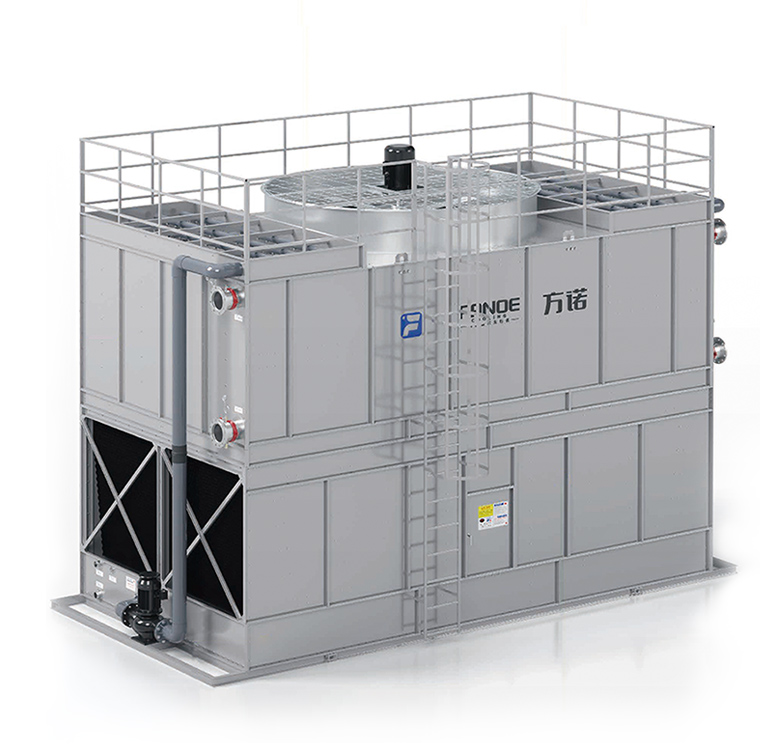
In a closed circuit cooling tower, the process fluid being cooled circulates through a sealed coil inside the tower and never directly contacts the external water or air stream. Heat transfers from the process fluid through the coil wall to a spray water circuit on the outside of the coil, and evaporation of that spray water removes the heat. Because the process fluid is kept isolated, closed circuit towers are used where contamination of the process fluid is unacceptable — data center cooling, food and beverage processing, some chemical processes, and applications where glycol solutions protect against freezing. They are more expensive than open cooling towers of equivalent capacity and require more maintenance attention to the spray water circuit, but they eliminate the risk of process fluid contamination from airborne particulates or biological growth in the tower basin.
Key Specifications for Selecting a Cooling Tower System
Selecting a water cooling tower for a specific application requires matching the tower's thermal capacity and operating characteristics to the system's actual requirements. These are the parameters that drive the selection:
| Parameter |
Definition |
Typical Design Value |
| Heat rejection duty |
Total heat load the tower must remove (kW or RT) |
Defined by process or HVAC system |
| Hot water temperature (HWT) |
Temperature of water entering the tower |
35–45°C for HVAC; higher for industrial |
| Cold water temperature (CWT) |
Temperature of water leaving the tower basin |
Typically 5–8°C above wet-bulb |
| Range |
Difference between HWT and CWT |
Commonly 5–10°C |
| Approach |
Difference between CWT and design wet-bulb temperature |
3–8°C; smaller = larger, more expensive tower |
| Design wet-bulb temperature |
Ambient wet-bulb at design conditions for the site |
Site-specific; use local weather data |
| Water flow rate |
Volume of water circulated through the tower |
Determined by heat load and range |
| Fan motor power |
Electrical power consumption of the cooling tower fan |
Varies widely; VFD drives reduce part-load energy |
The approach temperature is the most important single variable in cooling tower sizing. A smaller approach — meaning the cold water temperature gets closer to the ambient wet-bulb — requires a larger tower with more fill volume and airflow capacity. Specifying a tighter approach than the application actually needs results in a larger capital cost with no operational benefit. The converse is also true: specifying too loose an approach means the chiller or process equipment connected to the tower runs warmer water, reducing its efficiency. Getting the approach specification right is worth careful engineering analysis rather than using a rule of thumb.
Industrial Cooling Tower Applications and Specific Requirements
Industrial cooling towers serve a much wider range of processes than commercial HVAC applications, and many industrial processes impose specific requirements on the cooling tower design that go beyond standard commercial specifications.
- Power generation: Thermal power plants use cooling towers to reject heat from steam condensers. The scale is enormous — a single large power plant may reject more heat than an entire city's HVAC load — which is why natural draft hyperbolic towers are the design of choice. Condenser water temperatures and flow rates are tightly constrained by turbine efficiency requirements, and cooling tower performance directly affects plant heat rate and output capacity.
- Petrochemical and refining: Process cooling in refineries and chemical plants involves a wide range of process fluids, operating temperatures, and heat loads that vary with production rate. Industrial cooling towers in these environments must handle high thermal loads, operate reliably in continuous 24/7 service, and be constructed of materials compatible with the air quality around the plant — hydrogen sulfide, chlorine compounds, and other aggressive chemicals present in refinery atmospheres attack standard galvanized steel and require fiberglass or stainless construction for basin and structural components.
- HVAC and district cooling: Commercial building HVAC systems use cooling towers to reject heat from water-cooled chillers. These are typically packaged, factory-assembled units sized for the building's peak cooling load. District cooling systems — centralized chilled water plants serving multiple buildings — use larger field-erected cooling towers with redundant fan cells to ensure continuity of cooling even during maintenance shutdowns of individual cells.
- Data centers: Server cooling requires extremely reliable, low-approach cooling water supply. Data centers increasingly use closed circuit cooling towers or hybrid dry/wet adiabatic coolers that minimize water consumption while maintaining the cold water temperatures required for efficient chiller operation. Redundancy is built into the cooling tower system design at a level above typical commercial HVAC — N+1 or 2N fan cell configurations are common to ensure no single component failure interrupts cooling.
- Food and beverage processing: Process cooling in food production requires closed circuit towers or extremely well-managed open systems to prevent biological contamination of process water that could affect product safety. Legionella control is particularly stringent in food industry cooling tower applications, and water treatment programs must be validated and documented as part of food safety management systems.
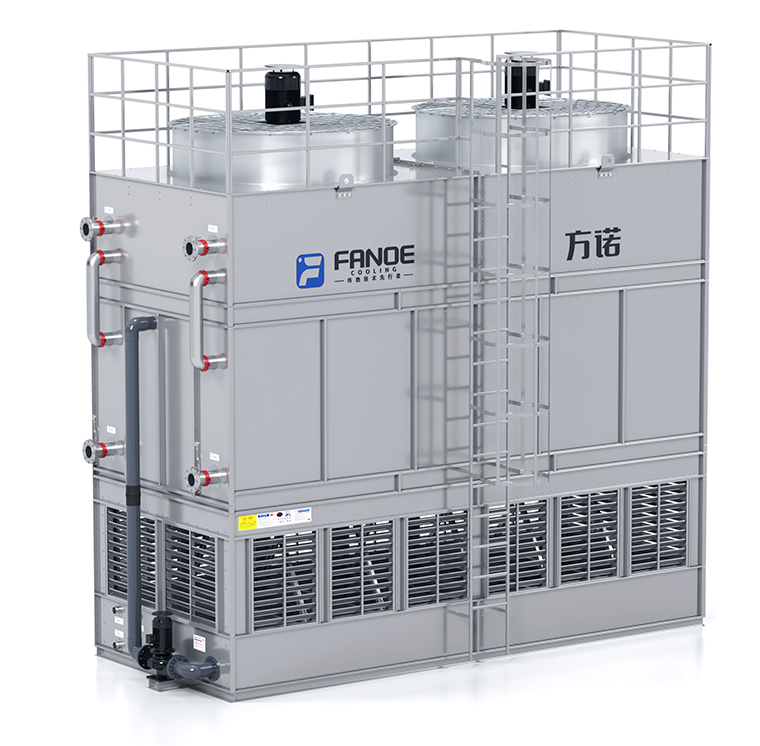
Cooling Tower Materials: What the Tower Is Built From Matters
The structural and fill materials used in a cooling tower directly affect its service life, maintenance requirements, and suitability for different operating environments. Material selection is particularly important for industrial cooling towers where atmospheric conditions or water chemistry can be aggressive.
Structure and Casing
Galvanized steel is the most common structural material for packaged cooling towers — it's cost-effective, strong, and adequate for most commercial HVAC environments with normal water chemistry. In coastal environments, industrial atmospheres, or applications where water chemistry is aggressive (high chloride content, low pH), galvanized steel corrodes faster than expected and requires more frequent maintenance or replacement. Fiberglass reinforced plastic (FRP) is the preferred alternative for corrosive environments — it's non-corroding, maintains structural integrity over a longer service life, and requires less surface maintenance. Stainless steel (typically 304 or 316 grade) basins are specified where biological control programs use high biocide concentrations or where process water contains contaminants that attack galvanized or FRP surfaces.
Fill Media
Fill media is the internal surface over which water is distributed to maximize air-water contact. PVC film fill — thin corrugated plastic sheets assembled into blocks — is the standard choice for most cooling tower applications. It provides a high surface area per unit volume, is lightweight, and is resistant to most water treatment chemicals. Splash fill — bars or grids that break water into droplets rather than creating a thin film — is used in applications where the process water contains suspended solids or fouling potential that would block film fill passages. Splash fill is easier to clean and more tolerant of dirty water but provides less thermal efficiency per unit volume than film fill, requiring a larger tower for equivalent performance.
Cooling Tower Maintenance: What Has to Be Done and When
Cooling tower maintenance is not optional — it's a safety requirement as much as an operational one. Poorly maintained cooling towers are the primary source of Legionella bacteria outbreaks in buildings and industrial facilities. Beyond biological risk, inadequate maintenance causes scaling, corrosion, fouling of fill media, and premature mechanical failure that increases operating costs and reduces system reliability.
Water Treatment
Cooling tower water treatment addresses three distinct problems: scale (mineral deposits from concentrated dissolved solids), corrosion (electrochemical attack on metal components), and biological growth (bacteria, algae, and biofilm). Each requires a different treatment chemistry, and the program must be balanced — some scale inhibitors affect biocide efficacy, and some biocides affect corrosion rates. Most industrial and commercial cooling tower operators contract with a water treatment specialist who conducts regular water analysis, adjusts chemical dosing, and documents the treatment program. Conductivity-based blowdown controllers that automatically discharge concentrated water and replenish with fresh make-up water are standard on well-managed systems and maintain water quality within target cycles of concentration without manual intervention.
Legionella Risk Management
Legionella pneumophila — the bacterium responsible for Legionnaires' disease — grows in water between 25°C and 45°C, exactly the operating range of most cooling towers. The warm, nutrient-rich water in a poorly maintained cooling tower basin is an ideal growth environment, and the drift from an operating tower can carry contaminated aerosols into surrounding air. Regulatory requirements for Legionella risk management in cooling towers exist in most jurisdictions and typically require a written risk assessment, regular microbiological testing, documented disinfection procedures, and records maintained for inspection. The specific requirements vary by country and region — in the UK, the HSE's Approved Code of Practice L8 is the governing standard; in the US, ASHRAE Standard 188 provides the framework. Operators who are uncertain about their obligations should seek specialist advice rather than assuming existing practices are sufficient.
Mechanical Maintenance Schedule
Beyond water treatment, the mechanical components of a cooling tower require scheduled inspection and service. The following outlines a typical maintenance framework:
- Weekly: Visual inspection of fan operation, water distribution coverage, basin water level and clarity, and drift eliminator condition. Check make-up water float valve operation and blowdown controller setpoints.
- Monthly: Inspect and clean strainers, check fan blade pitch and condition, lubricate fan shaft bearings per manufacturer schedule, verify motor current draw against baseline, test water chemistry and adjust treatment dosing.
- Quarterly: Inspect fill media for scaling, fouling, or biological growth. Check and clean spray nozzles or distribution headers. Inspect basin for sediment accumulation and corrosion. Verify drift eliminator integrity and fit.
- Annually: Full basin clean and disinfection, fan gearbox oil change (if applicable), complete mechanical inspection including structure, connections, and basin, Legionella risk assessment review, fill media inspection and replacement if degraded.
Energy Efficiency in Cooling Tower Systems
Cooling tower fan energy is a significant operating cost for large systems, and opportunities to reduce it have improved substantially with modern control technology. Variable frequency drives (VFDs) on fan motors allow fan speed — and therefore airflow and energy consumption — to be modulated in response to actual cooling load and ambient conditions. At part load, which represents the majority of annual operating hours in most climates, a tower with VFD-controlled fans can consume 50–70% less energy than a fixed-speed fan operating on an on-off cycle to maintain the same cold water temperature setpoint. The payback on VFD retrofits is typically 1–3 years on towers that run significant annual hours.
Optimizing the cold water temperature setpoint is another area where energy savings are available. Many cooling tower systems are controlled to a fixed cold water temperature setpoint year-round. In cooler weather, the tower can produce colder water than required, which wastes fan energy. A reset strategy that raises the cold water setpoint during mild weather — allowing the downstream chiller to benefit from the lower condenser water temperature — can reduce combined cooling tower and chiller energy consumption compared to either fixed setpoint strategy alone. This is called a chiller-tower optimization strategy and is implemented through building management system (BMS) logic rather than hardware changes.
Make-up water and blowdown represent not just water cost but also the energy embedded in treating and pumping that water. Optimizing cycles of concentration — running the system at higher mineral concentration before blowdown — reduces both make-up water consumption and blowdown volume while maintaining acceptable water quality. Modern conductivity controllers make this straightforward to implement and adjust as water quality or chemistry changes.
Common Problems and How to Diagnose Them
Cooling tower performance problems typically manifest as rising cold water temperatures that can't be explained by increased load or higher ambient wet-bulb. When the tower is no longer meeting its design cold water temperature under conditions where it previously did, the cause is usually one of the following:
- Fill fouling or scaling: Mineral scale or biological fouling on fill media reduces the effective air-water contact surface and the thermal efficiency of the fill. Visually inspecting the fill for white deposits, slime, or physical damage is the first diagnostic step. Chemically cleaning scaled fill can restore some performance; severely fouled or damaged fill requires replacement.
- Reduced airflow: Fan blade wear, incorrect pitch, belt slippage (on belt-drive units), or motor underperformance all reduce airflow through the fill. Measuring motor current and comparing to nameplate and baseline values identifies whether the fan is drawing the expected power. Fan blade inspection and pitch verification should be part of the diagnostic process.
- Recirculation: Hot exhaust air being drawn back into the tower air intake reduces the effective entering wet-bulb temperature. This is a site or installation problem rather than a component failure — it can result from nearby obstructions, poor siting relative to prevailing wind, or inadequate separation between adjacent towers. Measuring entering wet-bulb at the air intake and comparing to ambient wet-bulb quantifies the recirculation effect.
- Uneven water distribution: Blocked or worn spray nozzles, damaged distribution headers, or improper flow balance result in some sections of fill receiving too much water and others too little. The dry sections contribute little to cooling while the over-irrigated sections may flood, both reducing overall thermal performance. Observing the water distribution pattern with the tower in operation identifies this problem directly.
- Basin sediment accumulation: Sediment in the basin reduces effective basin volume, can harbor biological growth, and is drawn into the recirculating pump causing wear and flow reduction. Regular basin cleaning prevents accumulation from reaching the point where it affects system performance. If sediment is present, it should be removed before any disinfection procedure to ensure biocide contact with surfaces rather than organic material.



 Eng
Eng English
 中文简体
中文简体

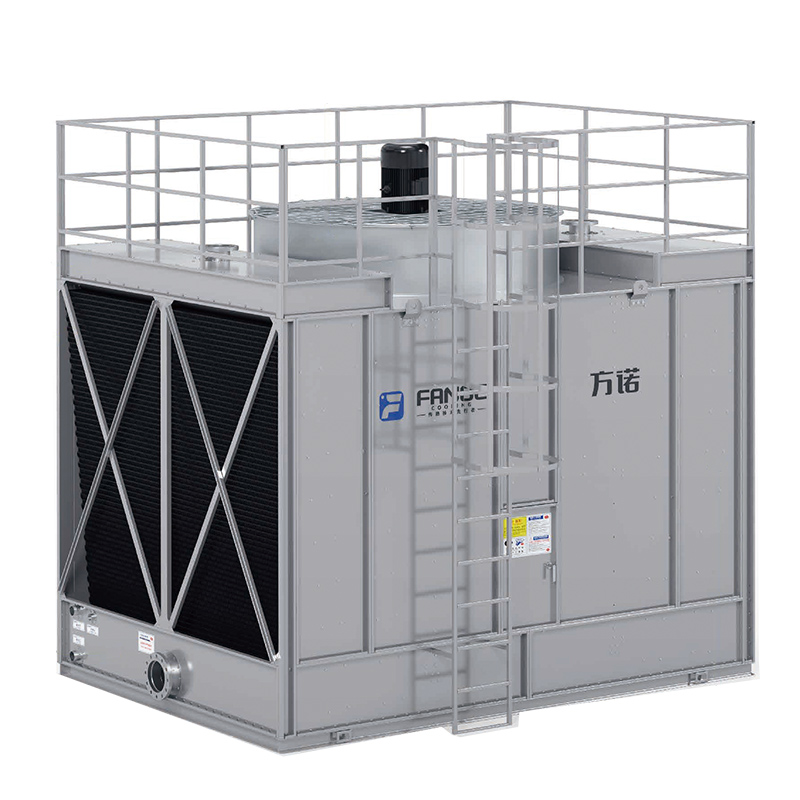 Cooling Towers Explained: How They Work, Types, and How to Pick the Right One
 What Is an Open Circuit Cooling Tower and How Does It Work?An open circuit cooling tower is one of the most common and cost-effective solutions for industrial and commercial heat rejection. If you're evaluatin...
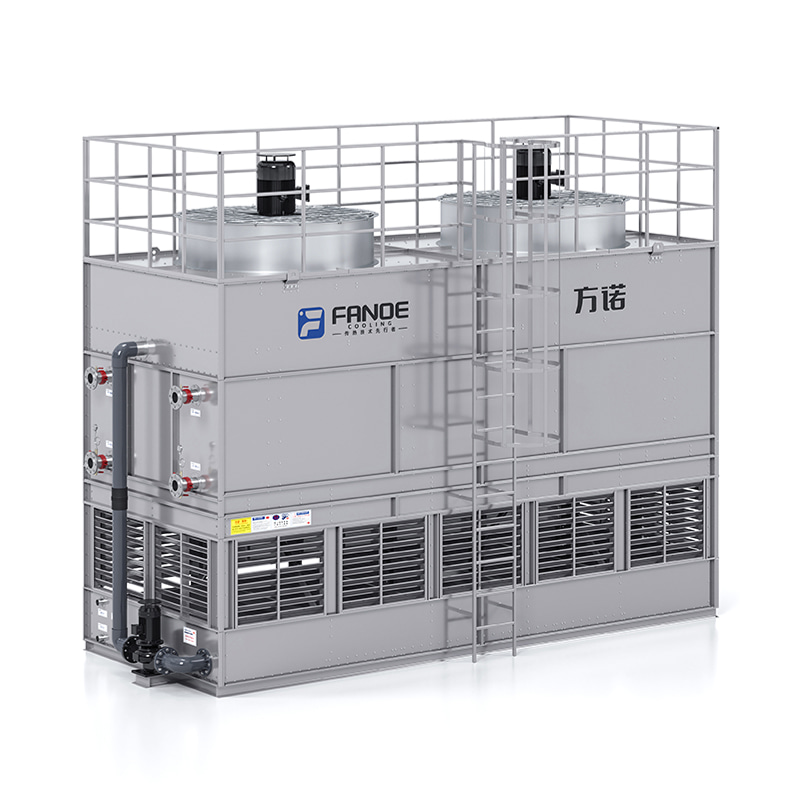 What Is a Closed Type Cooling Tower and When Should You Use One?How a Closed Type Cooling Tower Actually Works A closed type cooling tower — also widely referred to as a closed-circuit cooling tower, closed-loop c...
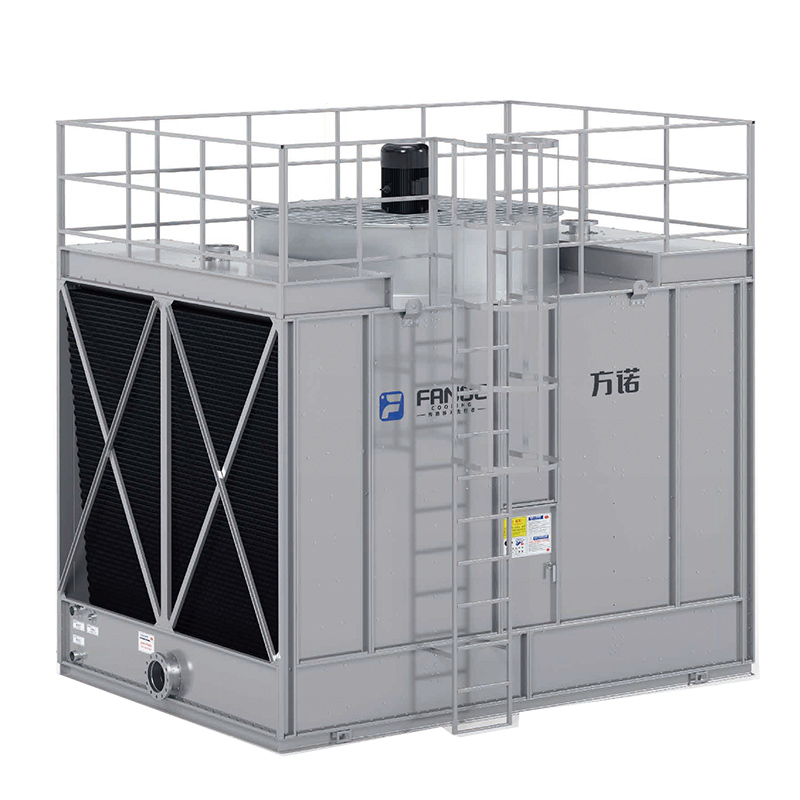 Cooling Tower Guide: Types, How They Work & Selection CriteriaHow a Cooling Tower Actually Works A cooling tower is a heat rejection device that removes waste heat from a process or building system by transferrin...
 Industrial Cooling Towers: How They Work, Types, and How to Keep Them Running RightWhat Industrial Cooling Towers Do and Why They Matter Industrial cooling towers are large heat rejection systems designed to remove excess thermal en...