TECHNICAL PARAMETERS
Types of fillers
(1) Classification by material
PVC filler: corrosion resistant, light weight, low cost, suitable for environments with temperature ≤60℃. Main applications: industrial circulation water cooling tower, air conditioning cooling tower, etc.
PP filler: high temperature resistant (up to 100℃), anti-aging, suitable for high temperature water quality; metal filler (such as stainless steel, aluminum alloy); high strength and high temperature resistance, but high cost, easy to scale, and need to be cleaned regularly.
Ceramic/wood filler: Traditional materials are now mostly replaced by plastics, but they are still used in certain special environments (such as high temperatures and corrosive gases).
(2) Classification by structure
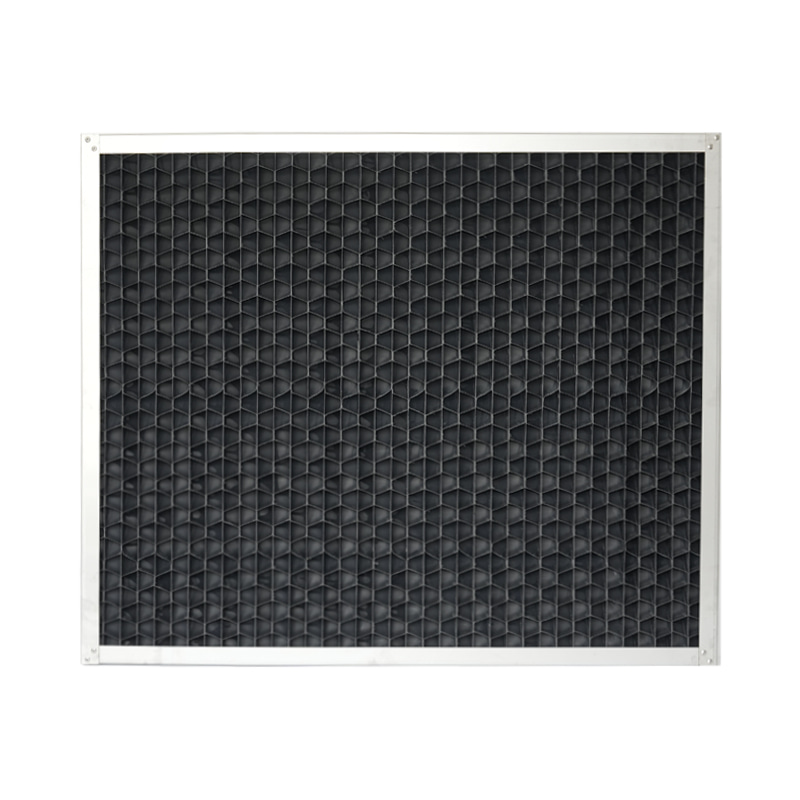
Thin film filler: Water forms a liquid film on the surface of the filler to exchange heat with air, such as corrugated plates and honeycomb fillers. Advantages: High heat exchange efficiency and water saving.
Drop-type filler: When water passes through the filler layer, it forms water droplets or water lines, such as grid fillers and strip fillers. Advantages: Strong anti-blocking and suitable for occasions with poor water quality.
Mixed filler: Combining the advantages of film and dropping, such as oblique staggered filler, S-wave filler, etc.
Key points of cooling tower fillers selection
Cooling tower form: The counterflow cooling tower generally prefers to use film or drop film fillers, which can reduce the total height and cost of the tower; the cross-flow cooling tower is conducive to the use of large-height drop fillers.
Thermal characteristics: Comprehensive evaluation is required in combination with the fan characteristics, and the filler with the largest cooling capacity under the same design conditions is selected, while the balance between the thermal performance and resistance characteristics of the filler is taken into account.
Cooling task: Select the appropriate filler based on factors such as the amount of water required to cool, water temperature, and the water temperature requirements after cooling to ensure that the needs of the cooling task can be met.
Water quality of circulating cooling water: When the concentration of raw oil, etc. in the water may leak in raw water or the concentration of suspended substances of cooling water is greater than 100mg/L, it is advisable to choose drop-and-drop filler; when the water quality is better or the concentration of suspended substances of cooling water is less than 50mg/L, it is advisable to choose thin-film filler.
Ventilation conditions: Good ventilation conditions are crucial to the heat dissipation effect of the filler, so it is necessary to consider the ventilation resistance of the filler and the overall ventilation design of the cooling tower to ensure that air can pass through the filler layer smoothly.
Support method of filler: The assembly form of filler should be stable and convenient for construction and daily maintenance. When the packing block is directly simply supported on the support beam, the support beam should adopt a structure with a small width and low ventilation resistance, and the middle distance of the beam should be matched with the optimal size of the simple support of the packing block.
Cost of filler: On the premise of meeting cooling effect and other performance requirements, the cost of filler needs to be considered, including procurement costs, installation costs and later maintenance costs, so as to maximize economic benefits.
Development trend of cooling tower fillers
High-efficiency low-resistance packing: Optimize structural design (such as three-dimensional packing) to improve heat exchange efficiency and reduce air resistance.
Environmentally friendly materials: the use of recyclable plastics or biodegradable materials.
Intelligent management: Use sensors to monitor the blockage or aging status of fillers to achieve predictive maintenance.



 Eng
Eng English
 中文简体
中文简体