What Industrial Cooling Towers Do and Why They Matter
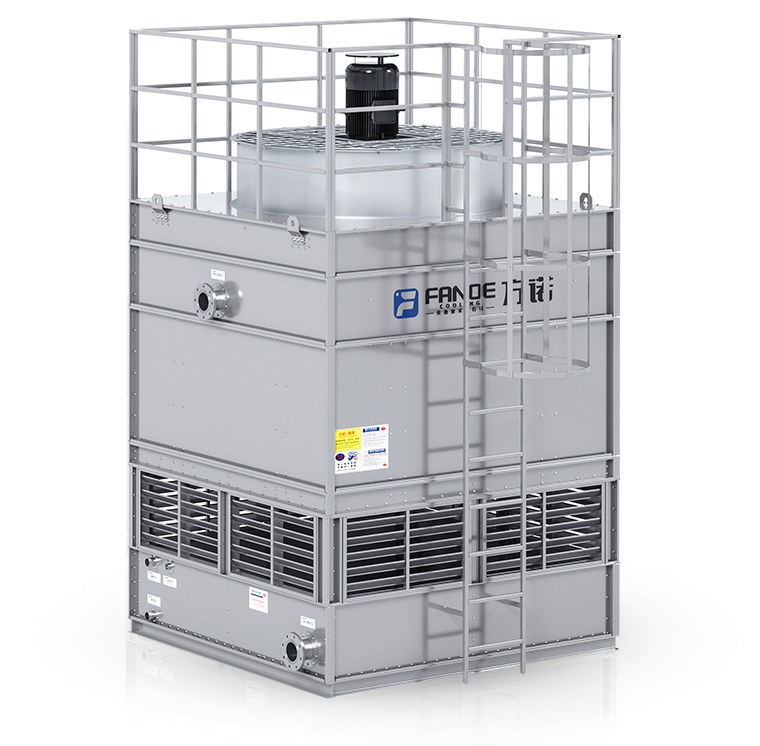
Industrial cooling towers are large heat rejection systems designed to remove excess thermal energy from industrial processes, power generation, HVAC systems, and manufacturing operations by transferring that heat into the atmosphere. Nearly every heavy industry — from oil refining and chemical manufacturing to steel production and data centers — depends on cooling tower systems to maintain safe, efficient operating temperatures in equipment, condensers, and process streams. Without reliable heat rejection, exothermic reactions would overheat, turbine condensers would lose efficiency, and machinery would fail from thermal stress.
The core mechanism behind virtually all industrial cooling tower systems is evaporative cooling. As warm process water is distributed across the tower's fill media and exposed to moving air, a small percentage of the water evaporates. This phase change — liquid water becoming vapor — absorbs a disproportionately large amount of latent heat (approximately 970 BTU per pound of water evaporated at 212°F). The result is that the remaining bulk water is cooled significantly before being recirculated back to the process equipment. This makes industrial cooling towers dramatically more efficient than dry air coolers, which rely solely on sensible heat transfer and require much larger surface areas to achieve equivalent cooling.
The scale of industrial cooling tower installations reflects their critical importance. A single large power plant cooling tower can circulate hundreds of thousands of gallons of water per minute and dissipate heat loads measured in hundreds of millions of BTU per hour. Even in mid-sized manufacturing plants, cooling tower systems represent a major operational investment — and a major operational liability when they fail or operate inefficiently. Understanding the fundamentals of how these systems work is essential for plant engineers, facility managers, and operations personnel responsible for uptime and energy costs.
Types of Industrial Cooling Towers and How to Choose Between Them
Industrial cooling towers come in several distinct configurations, each optimized for different heat loads, site constraints, water quality conditions, and operational priorities. The choice of tower type has long-term implications for capital cost, operating cost, maintenance burden, and performance in hot or cold climates. Here's a practical breakdown of the main types:
Counterflow vs. Crossflow Cooling Towers
The most fundamental distinction in industrial cooling tower design is the relationship between air and water flow direction through the fill media:
- Counterflow cooling towers direct air upward through the fill while hot water falls downward — directly opposing each other. This arrangement maximizes the temperature differential between air and water at every point in the fill, producing the most thermodynamically efficient heat transfer possible. Counterflow towers are more compact for a given heat load and handle higher thermal loads efficiently, but their enclosed hot water distribution systems (spray nozzles under pressure) are more complex and can be harder to access for cleaning and inspection.
- Crossflow cooling towers draw air horizontally through the fill while water flows vertically downward — perpendicular to each other. Water is distributed by gravity through open hot water basins at the top of the fill, making distribution systems easier to inspect and clean. Crossflow towers tend to have a lower profile and are easier to maintain, making them popular in facilities where access and cleaning frequency are priorities. They are generally somewhat less efficient thermally than counterflow designs at equivalent conditions.
Mechanical Draft vs. Natural Draft Towers
Air movement through the tower is driven either by mechanical fans or by natural convection:
- Induced draft towers place large-diameter fans at the top of the tower to pull air upward through the fill and exhaust it out the top. This creates a negative pressure zone inside the tower, drawing air in through the louvers at the base. Induced draft is the most common configuration in industrial applications because it produces a well-distributed, relatively high-velocity airflow and handles variable loads effectively with variable-frequency drive (VFD) fan control.
- Forced draft towers mount fans at the base of the tower to push air upward through the fill. This arrangement makes fan maintenance easier (fans are at ground level) but creates hot, humid exhaust air recirculation issues because the low-velocity discharge at the top can be drawn back into the intake under certain wind conditions.
- Natural draft (hyperbolic) cooling towers are the iconic hyperboloid concrete structures seen at power plants. They use the stack effect — hot, moist air rising inside the tower creates buoyancy that draws in fresh ambient air at the base without any fans. These towers require enormous capital investment and are only cost-effective at very large scale (hundreds of MW thermal load), but they have essentially zero fan energy consumption and require minimal mechanical maintenance.
Wet, Dry, and Hybrid Cooling Towers
- Wet (evaporative) cooling towers are the standard industrial type, relying on evaporation as described above. They deliver excellent thermal performance at relatively low cost but consume significant quantities of water (typically 2–3 gallons per minute per 100 tons of cooling) through evaporation, drift, and blowdown.
- Dry cooling towers (Air-Cooled Condensers): Use finned tube heat exchangers to transfer heat to air without any water evaporation. They consume virtually no water, making them attractive in water-scarce regions, but require significantly larger footprints and fan power, and their performance degrades substantially in high ambient temperatures — precisely when cooling demand peaks.
- Hybrid (wet-dry) cooling towers combine wet and dry sections to reduce water consumption while maintaining reasonable thermal performance. In cool weather, the dry section handles most of the heat load with zero water use; in hot weather, the wet section supplements performance. These systems are increasingly specified in regions facing water scarcity regulations.
| Tower Type |
Air-Water Flow |
Thermal Efficiency |
Maintenance Access |
Best For |
| Counterflow Induced Draft |
Opposing |
High |
Moderate |
High load, compact sites |
| Crossflow Induced Draft |
Perpendicular |
Moderate |
Easy |
Easy maintenance priority |
| Natural Draft (Hyperbolic) |
Counterflow |
High |
Difficult |
Power plants, very large loads |
| Dry (Air-Cooled) |
Crossflow |
Lower |
Easy |
Water-scarce regions |
| Hybrid (Wet-Dry) |
Combined |
Variable |
Moderate |
Water conservation mandates |
Key Components of an Industrial Cooling Tower System
Understanding the function of each major component in an industrial cooling tower helps operators pinpoint the source of performance problems and prioritize maintenance effectively. Every component plays a specific role in the heat transfer process, and degradation of any one of them cascades into reduced overall cooling capacity.
Fill Media (Packing)
Fill media is the heart of the evaporative cooling process. Its purpose is to maximize the contact surface area between water and air by breaking water into thin films or small droplets as it falls through the tower. Two main fill types are used in industrial cooling towers: film fill, which consists of thin corrugated PVC sheets that spread water into a thin film for maximum evaporative surface; and splash fill, which uses horizontal bars or grids that break falling water into droplets. Film fill is more thermally efficient and is the dominant choice in modern installations. Splash fill is more resistant to scaling and biological fouling, making it preferable when water quality is poor or biological control is challenging. Fill media is a wear item — it accumulates scale, biological growth, and physical damage over years of operation and typically needs replacement every 10–20 years depending on water quality and operating conditions.
Drift Eliminators
Drift eliminators are closely spaced baffles mounted in the tower's air discharge path. Their job is to capture water droplets entrained in the exiting air stream before they escape to the atmosphere. These captured droplets — called drift — represent both water loss and a potential environmental and health hazard, since drift droplets can carry Legionella bacteria, Chromium compounds (in some industrial applications), or other contaminants to surrounding areas. Modern high-efficiency drift eliminators limit drift losses to less than 0.0005% of the circulating water flow rate. Older towers with degraded or missing drift eliminators may exceed this by orders of magnitude, creating regulatory compliance issues and Legionella risk.
Hot Water Distribution System
Warm return water from the process enters the tower through the hot water distribution system, which spreads it evenly across the entire fill area. Even distribution is critical — uneven distribution creates hot spots where inadequate cooling occurs and stagnant zones where biological growth flourishes. In counterflow towers, distribution is typically accomplished through pressurized spray nozzles that atomize water across the fill deck. In crossflow towers, gravity-fed open basins with metering orifices distribute water by head pressure. Nozzle clogging and orifice fouling are common maintenance problems that directly degrade cooling performance.
Cold Water Basin
The cold water basin at the base of the tower collects cooled water after it has passed through the fill. It serves as a buffer reservoir and the suction source for the recirculating pump. Basin design and maintenance have significant implications for water quality — stagnant areas in the basin accumulate sediment, support biological growth, and can harbor Legionella. Well-designed basins include sloped floors toward a sump drain, basin sweeper systems for continuous sediment removal, and adequate turnover to prevent stagnation. Basin level is controlled by makeup water float valves that automatically replenish evaporative and drift losses.
Fans, Drive Shafts, and Gear Reducers
The fans in mechanical draft industrial cooling towers are among the largest fans used in any industrial application — diameters of 10 to 30 feet are common in large installations. They are typically driven by electric motors through right-angle gear reducers and drive shafts, though direct-drive configurations with large permanent magnet motors are gaining adoption for their reduced maintenance requirements. Fan blades are made from fiberglass, aluminum, or stainless steel and are adjustable in pitch to tune airflow to seasonal conditions. Fan and gear reducer maintenance — including oil changes, vibration monitoring, blade pitch verification, and bearing replacement — is among the most critical maintenance activities in a cooling tower operation.
Cooling Tower Water Treatment: The Make-or-Break Factor
Water treatment is arguably the single most important operational factor in the long-term performance of an industrial cooling tower system. Poor water chemistry causes scale, corrosion, and biological fouling — all of which reduce heat transfer efficiency, damage equipment, and create safety hazards. Yet water treatment is also one of the most frequently under-resourced areas of cooling tower operation.
Why Cooling Tower Water Concentrates Contaminants
As water evaporates in the cooling tower, it leaves behind all dissolved minerals — calcium, magnesium, silica, chlorides, sulfates, and more. Because only pure water evaporates, these minerals accumulate in the circulating water over time. The degree of concentration is expressed as the Cycles of Concentration (CoC) — a ratio of the mineral concentration in the circulating water to the concentration in the makeup water. A system running at 5 CoC has five times the mineral concentration of its makeup water source. Without controlled blowdown (intentionally draining a portion of the concentrated circulating water and replacing it with fresh makeup water), CoC would rise indefinitely until minerals began precipitating as scale on heat transfer surfaces and fill media.
Scaling and Scale Inhibitors
Calcium carbonate scale is the most common deposit problem in industrial cooling tower systems. At elevated temperatures and pH levels above approximately 8.0, calcium and carbonate ions exceed their solubility limits and precipitate onto hot heat exchanger surfaces and fill media. Even a thin scale layer of 1/16 inch on a heat exchanger tube surface can reduce heat transfer efficiency by 10–15% and dramatically increase energy consumption. Scale inhibitors — including phosphonates, polyacrylic acids, and maleic acid copolymers — are dosed continuously into the circulating water to interfere with crystal growth and keep minerals in suspension where they can be removed by blowdown. Silica scale, which forms when silica concentrations exceed approximately 150 ppm, is particularly damaging and difficult to remove once deposited.
Corrosion Control
Industrial cooling tower systems contain a mix of metals — steel basins, copper alloy heat exchanger tubes, galvanized steel components, and cast iron pumps — each with different corrosion vulnerabilities. Low pH water is aggressively corrosive to most metals; high pH water causes calcium carbonate deposition. Operating the system within a controlled pH window (typically 7.0–8.5 for systems with copper components) is the foundation of corrosion control. Corrosion inhibitors — including azoles for copper protection, molybdates or orthophosphates for steel protection, and zinc compounds — are added to provide electrochemical protection of metal surfaces beyond what pH control alone achieves. Regular corrosion coupon programs — inserting small metal specimens into the circulating water and measuring their weight loss after a defined exposure period — provide objective data on whether the corrosion inhibitor program is performing adequately.
Biological Control and Legionella Risk Management
Industrial cooling towers are well-recognized as potential breeding grounds for Legionella pneumophila, the bacterium responsible for Legionnaires' disease — a severe, potentially fatal pneumonia. The warm, nutrient-rich circulating water, combined with the aerosol-generating nature of cooling tower operation, creates near-ideal conditions for Legionella amplification and transmission. Regulatory requirements for Legionella risk management have tightened significantly in recent years, with mandatory Water Management Plans (WMPs) now required in many jurisdictions for cooling towers above a defined size threshold.
Biocide programs for industrial cooling tower water treatment typically use a combination of oxidizing and non-oxidizing biocides:
- Oxidizing biocides — Chlorine (from sodium hypochlorite or gas), bromine (from sodium bromide with an oxidant activator), and chlorine dioxide are the most common. They work by oxidizing cell membranes and metabolic enzymes. Chlorine effectiveness drops significantly above pH 7.5 and in the presence of high ammonia or organic loads; bromine maintains efficacy over a broader pH range.
- Non-oxidizing biocides — Isothiazolinones, quaternary ammonium compounds (quats), glutaraldehyde, and 2,2-dibromo-3-nitrilopropionamide (DBNPA) are rotated on a periodic basis to prevent resistance development. They are particularly effective against biofilm — the slimy matrix of bacteria, algae, and extracellular polymers that forms on surfaces and provides physical protection against oxidizing biocides.
Routine Legionella monitoring by culture (ASHRAE 188 recommends quarterly testing at minimum) or by rapid PCR-based methods provides early warning of Legionella amplification events. When test results exceed action level thresholds, intensified disinfection protocols must be implemented promptly.
Industrial Cooling Tower Maintenance: A Practical Schedule
Structured, documented maintenance is the difference between a cooling tower that operates reliably for decades and one that fails prematurely, causes costly shutdowns, or creates regulatory liability. The following maintenance framework covers the key tasks and their recommended frequencies:
| Frequency |
Maintenance Task |
Key Parameter / Target |
| Daily |
Check water chemistry (pH, conductivity, biocide residual) |
pH 7.0–8.5; conductivity per CoC target |
| Daily |
Inspect fan operation, unusual vibration or noise |
No abnormal vibration or bearing noise |
| Weekly |
Inspect basin for sediment, algae, or debris |
Clean basin floor; no visible algae mats |
| Weekly |
Check makeup water valve and float operation |
Correct basin level; no overflow |
| Monthly |
Inspect fill media for scale, fouling, or damage |
No blocked channels; no structural collapse |
| Monthly |
Gear reducer oil level check |
Oil at correct level; no water emulsification |
| Quarterly |
Legionella culture testing |
<1 CFU/mL action level (varies by regulation) |
| Semi-annually |
Fan blade inspection and pitch adjustment |
Equal pitch on all blades; no cracks or erosion |
| Annually |
Full tower inspection, cleaning, and disinfection |
Per ASHRAE 188 or local WMP requirements |
| Annually |
Gear reducer oil change |
Per OEM specification |
| As needed |
Fill media replacement |
Every 10–20 years or when thermal performance declines |
Annual Shutdown Inspection and Cleaning
The annual shutdown inspection is the most comprehensive maintenance event in the cooling tower calendar. During this inspection, the tower is taken offline, drained, and thoroughly cleaned and inspected. Key activities include high-pressure washing of basin surfaces, fill media, drift eliminators, and distribution system components; inspection of structural elements including the casing, basin walls, louvers, and access ladders for corrosion or damage; bearing replacement on fan assemblies; alignment checks on drive shafts and couplings; and a full chemical disinfection of all wetted surfaces per the facility's Legionella Water Management Plan. Documentation of all findings and corrective actions taken during the annual shutdown provides the baseline record for tracking long-term tower condition trends.
Energy Efficiency in Industrial Cooling Tower Systems
Industrial cooling towers and the chillers, compressors, or process equipment they serve often represent 30–50% of a facility's total electricity consumption. Optimizing cooling tower system energy efficiency is therefore one of the highest-return investments a plant can make. Several proven strategies deliver significant energy savings:
Variable Frequency Drive Fan Control
Installing variable frequency drives (VFDs) on cooling tower fans is typically the single highest-return energy efficiency measure available. Because fan power varies with the cube of fan speed, reducing fan speed by 20% reduces fan power consumption by nearly 50%. VFDs allow cooling tower fans to modulate speed in response to actual thermal load and ambient conditions rather than running at full speed whenever the system is operating. In facilities with variable heat loads or significant seasonal temperature swings, VFD-controlled cooling tower fans routinely deliver 40–60% reductions in fan energy consumption compared to fixed-speed operation.
Optimizing Cycles of Concentration
Increasing the cycles of concentration from 3 to 6 (a common target with modern water treatment chemistry) reduces makeup water consumption by approximately 20% and reduces blowdown volume by approximately 33%. This directly cuts water and sewer costs, and reduces the energy required to heat makeup water in colder climates. However, higher CoC requires more aggressive scale and corrosion inhibitor programs and more precise blowdown control — typically automated via conductivity-based blowdown controllers rather than manual timer-based blowdown.
Cooling Tower System Optimization (Approach Temperature)
The approach temperature — the difference between the cold water leaving the tower and the ambient wet-bulb temperature — is the key indicator of cooling tower thermal performance. A well-maintained industrial cooling tower should achieve an approach of 5–10°F to the wet-bulb temperature. Every degree of improvement in approach temperature directly improves chiller or process equipment efficiency. Scale on fill media is the primary culprit in approach degradation: even 1/8 inch of calcium carbonate scale on fill surfaces can increase the approach temperature by 5°F or more, forcing chillers to work harder and consume more energy. Regular fill media inspection and chemical cleaning or replacement is therefore directly linked to energy cost reduction.
Free Cooling (Waterside Economizer)
In cooler months, the industrial cooling tower may be capable of producing water cold enough to directly serve chilled water loads — bypassing the chiller entirely through a heat exchanger arrangement called a waterside economizer or free cooling mode. Depending on climate and process requirements, free cooling can displace mechanical chiller operation for hundreds of hours per year, delivering major reductions in compressor energy consumption. The economics of free cooling installation are highly favorable in most industrial climates, with payback periods of 2–5 years being common.
Common Cooling Tower Problems and How to Diagnose Them
Industrial cooling tower systems give operators clear signals when something is wrong — if you know what to look for. Here are the most frequently encountered operational problems and their diagnostic indicators:
- Rising approach temperature: The most common performance problem. Usually caused by scale accumulation on fill media or heat exchangers, fill media collapse or fouling, or inadequate airflow from failed or degraded fans. Compare current approach temperature against baseline data from when the tower was last cleaned. If approach has risen more than 3–5°F, a fill inspection and potential acid cleaning or replacement is warranted.
- Excessive water loss: Water consumption above the theoretical evaporation + blowdown + drift budget indicates a leak somewhere in the system — often in the basin, distribution piping, or heat exchanger. High drift losses from damaged or missing drift eliminators also contribute. Systematically check all basin penetrations, expansion joints, and distribution system components.
- Gear reducer overheating or vibration: Gear reducer problems are among the most expensive failure modes in a mechanical draft cooling tower. Elevated oil temperature, abnormal vibration, or oil discoloration (milky = water contamination; dark = overheating) all signal that gear reducer maintenance or replacement is needed urgently. Continued operation with a failing gear reducer risks catastrophic fan shaft failure.
- Visible biological growth: Algae mats on basin walls or fill media, slime on distribution system components, or visible biofilm on accessible surfaces indicate that the biocide program has failed to control biological growth. This requires immediate investigation of biocide residual levels, contact time, and whether biofilm has developed resistance to the current biocide rotation.
- Icing in cold weather: Ice formation on fill media, fan blades, or louvers can cause structural damage. Counterflow towers are more prone to icing because cold air enters at the base where the coldest water falls. Solutions include reducing or reversing fan operation to allow warm air recirculation, installing ice-detection control systems, and designing operating protocols for sub-freezing conditions with variable fan control.
Industrial cooling towers are complex, high-stakes systems where the consequences of neglect — energy waste, process downtime, equipment damage, regulatory penalties, and public health risk — are all serious and all preventable with disciplined operation and maintenance. Whether you manage a single small evaporative cooling tower or a multi-cell central plant serving a major industrial facility, the principles are the same: understand how the system works, track its performance against baseline, maintain water chemistry within specification, follow a structured maintenance schedule, and address problems when they are small rather than when they become failures. A well-operated industrial cooling tower system will reliably deliver the cooling your process demands for 20–30 years or more.



 Eng
Eng English
 中文简体
中文简体

 What Is an Open Circuit Cooling Tower and How Does It Work?
 What Is a Closed Type Cooling Tower and When Should You Use One?How a Closed Type Cooling Tower Actually Works A closed type cooling tower — also widely referred to as a closed-circuit cooling tower, closed-loop c...
 Cooling Tower Guide: Types, How They Work & Selection CriteriaHow a Cooling Tower Actually Works A cooling tower is a heat rejection device that removes waste heat from a process or building system by transferrin...
 Industrial Cooling Towers: How They Work, Types, and How to Keep Them Running RightWhat Industrial Cooling Towers Do and Why They Matter Industrial cooling towers are large heat rejection systems designed to remove excess thermal en...
 Evaporative Condenser Explained: How It Works, How to Choose One, and How to Keep It RunningWhat Is an Evaporative Condenser and How Does It Work? An evaporative condenser is a heat rejection device that combines the functions of a condenser ...