The Fundamentals of Counter-Current Heat Exchange
A counter-current evaporative condenser operates on a sophisticated thermodynamic principle where the cooling medium and the refrigerant move in opposite directions. In this configuration, the hot refrigerant vapor enters the top of the coil bundle and flows downward, while the cooling air is drawn upward from the bottom. Simultaneously, water is sprayed over the coils, flowing downward with gravity. This specific directional strategy ensures that the coldest air meets the coldest water at the bottom, maintaining a consistently high temperature gradient across the entire heat exchange surface. By preventing the "thermal equilibrium" often reached in parallel-flow systems, the counter-current design extracts the maximum amount of heat per square meter of surface area.
Core Components and Structural Dynamics
The efficiency of these systems relies on the seamless integration of several high-performance components. Each part is designed to withstand harsh environmental conditions while facilitating rapid heat rejection. The following table outlines the primary elements found in a standard counter-current unit:
| Component |
Function |
| Condensing Coil |
The primary heat transfer surface where refrigerant rejects heat to the water film. |
| Axial or Centrifugal Fan |
Creates the upward airflow (induced or forced draft) required for evaporation. |
| Water Distribution System |
Utilizes non-clogging nozzles to ensure uniform wetting of the coil surface. |
| Drift Eliminators |
Removes water droplets from the discharge air to conserve water and prevent spotting. |
Operational Advantages in Industrial Refrigeration
Implementing a counter-current evaporative condenser offers significant advantages over traditional air-cooled or shell-and-tube systems. Because it utilizes the latent heat of vaporization of water, it can achieve much lower condensing temperatures, often approaching the ambient wet-bulb temperature. This direct reduction in condensing pressure allows the compressor to operate with a lower compression ratio, leading to a substantial decrease in kilowatt consumption. In large-scale industrial plants, this translates to thousands of dollars in annual energy savings and a reduced carbon footprint.

Key Performance Benefits
- Reduced compressor head pressure, extending the mechanical life of the refrigeration rack.
- Compact footprint compared to air-cooled condensers of equivalent capacity.
- Lower water consumption than once-through cooling systems due to effective recirculation.
- Enhanced reliability in high-ambient temperature climates where air-cooling often fails.
Maintenance and Longevity Considerations
To maintain the "counter-current" efficiency, proactive maintenance is essential. Scale accumulation on the coils is the most common deterrent to performance, as it acts as an insulator, obstructing heat flow. Water treatment programs are critical to manage mineral concentration and prevent biological growth, such as Legionella. Modern units often feature hot-dip galvanized or stainless steel construction to resist the corrosive effects of the constant wetting and drying cycles inherent in the evaporative process.
Critical Maintenance Tasks
- Regular inspection of spray nozzles to ensure 100% coil coverage and prevent "dry spots."
- Monthly testing of water chemistry and blow-down rates to control total dissolved solids (TDS).
- Cleaning of the air intake louvers to ensure unobstructed, high-velocity counter-flow air.
- Lubrication and tension checking of fan motors and drive belts to sustain airflow integrity.



 Eng
Eng English
 中文简体
中文简体

 What Is an Open Circuit Cooling Tower and How Does It Work?
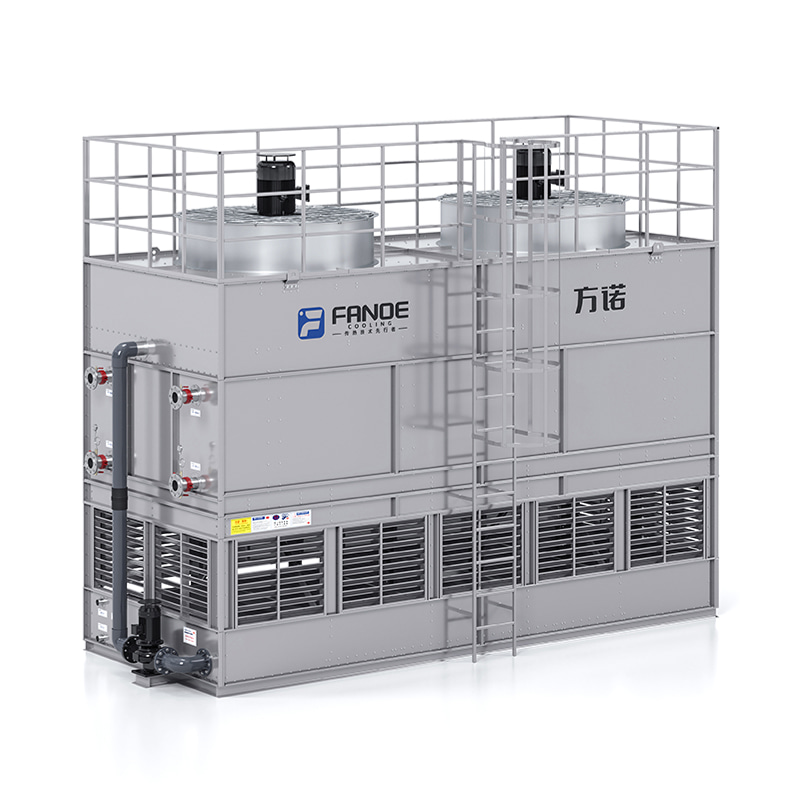 What Is a Closed Type Cooling Tower and When Should You Use One?How a Closed Type Cooling Tower Actually Works A closed type cooling tower — also widely referred to as a closed-circuit cooling tower, closed-loop c...
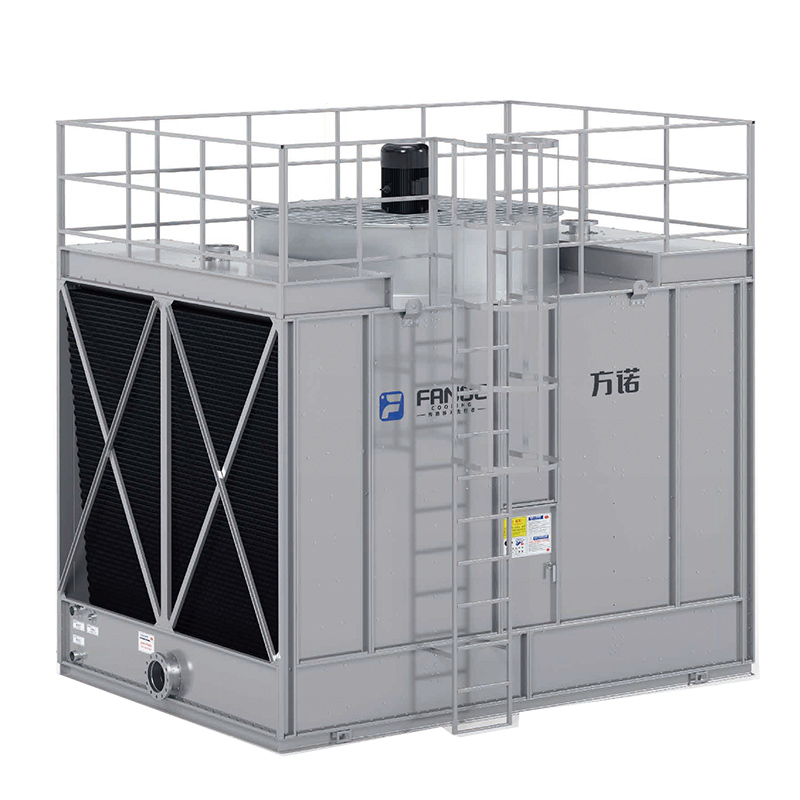 Cooling Tower Guide: Types, How They Work & Selection CriteriaHow a Cooling Tower Actually Works A cooling tower is a heat rejection device that removes waste heat from a process or building system by transferrin...
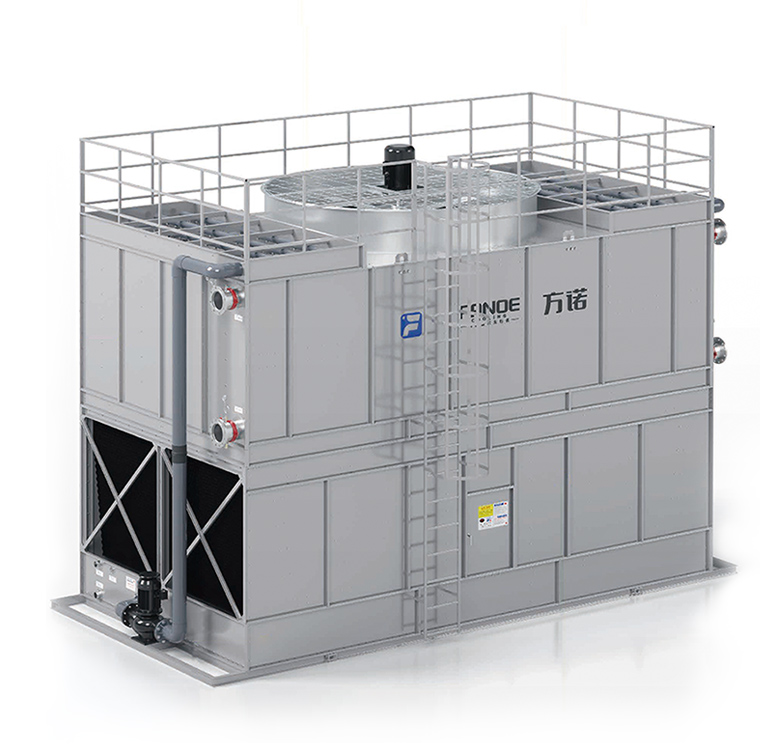 Industrial Cooling Towers: How They Work, Types, and How to Keep Them Running RightWhat Industrial Cooling Towers Do and Why They Matter Industrial cooling towers are large heat rejection systems designed to remove excess thermal en...
 Evaporative Condenser Explained: How It Works, How to Choose One, and How to Keep It RunningWhat Is an Evaporative Condenser and How Does It Work? An evaporative condenser is a heat rejection device that combines the functions of a condenser ...