In the continuous quest for optimized industrial and commercial operations, effective heat rejection is paramount. Closed Cooling Towers have emerged as the superior choice for thermal management, particularly in applications where maintaining the purity of the process fluid is critical. Unlike open-circuit systems that expose the working fluid to the ambient air, Closed Cooling Towers provide a protective, sealed barrier, leading to enhanced system longevity and reduced operational costs.
Design and Operation: The Sealed Advantage
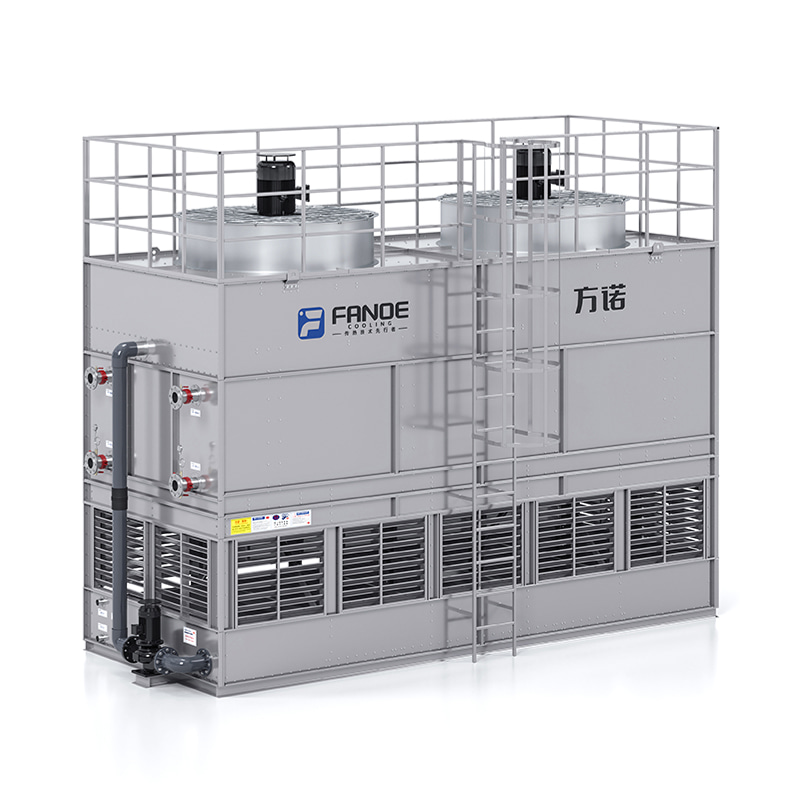
The core feature distinguishing a Closed Cooling Tower is the coil heat exchanger—a network of tubes typically made of stainless steel or galvanized steel. The system operates on a principle of indirect heat transfer:
- Process Fluid Isolation: The hot fluid from the plant (e.g., from a compressor jacket, an induction furnace, or a chiller condenser) is pumped through the coil. It remains entirely isolated from the atmosphere.
- External Evaporative Cooling: A secondary, external water circuit continuously sprays water over the outside of the hot coil.
- Heat Transfer: Heat passes from the warm process fluid through the coil walls to the external spray water.
- Cooling Mechanism: A fan draws air upward, causing a small portion of the spray water to evaporate. This evaporation removes latent heat from the remaining spray water, effectively cooling the coil and, indirectly, the process fluid inside.
This design ensures that the cooling mechanism (evaporation) takes place in the external spray circuit, while the critical process fluid remains clean and contamination-free within the coil.
Economic and Maintenance Benefits
The inherent design of Closed Cooling Towers translates directly into substantial economic and maintenance advantages:
- Corrosion and Fouling Prevention: By preventing aeration and the ingestion of airborne contaminants, Closed Cooling Towers eliminate the primary causes of scaling, biological growth, and corrosion within the primary process loop. This protection is vital for expensive, sensitive equipment like laser chillers, heat exchangers, and injection molding machinery.
- Reduced Water Loss and Treatment Costs: While evaporative water loss still occurs in the external spray loop, the ability to use specialized, high-quality fluids (like glycol solutions for freeze protection) in the closed loop without risk of dilution simplifies water treatment for the core system. Furthermore, in dry-mode operation, some Closed Cooling Towers can operate without any evaporation, conserving water entirely.
- System Reliability and Uptime: The robust protection afforded by a closed-loop system dramatically increases the time between maintenance cycles and minimizes unexpected downtime. Facility managers rely on the predictable performance and fluid quality control offered by Closed Cooling Towers.
- Optimal Performance with Glycol: For applications requiring freeze protection or specific fluid properties, Closed Cooling Towers allow for the use of glycol-water mixtures. Since the fluid is sealed, the correct concentration of the mixture is maintained without loss or dilution, ensuring continuous protection against freezing in cold climates.
Versatility in High-Demand Applications
The demand for reliable and clean heat rejection positions Closed Cooling Towers as the preferred technology across diverse high-demand sectors:
- Data Centers and IT: Ensuring chiller condenser water remains pristine is critical for preventing downtime in mission-critical cooling systems.
- Manufacturing: Cooling lubricants, induction coils, and hydraulic presses where debris or contamination would instantly compromise equipment functionality.
- Laboratories and Pharmaceuticals: Where precise temperature control and the integrity of specialized cooling mediums are non-negotiable standards.
In essence, selecting a Closed Cooling Tower is a strategic decision that prioritizes system longevity, operational efficiency, and the long-term protection of valuable process equipment.



 Eng
Eng English
 中文简体
中文简体

 What Is an Open Circuit Cooling Tower and How Does It Work?
 What Is a Closed Type Cooling Tower and When Should You Use One?How a Closed Type Cooling Tower Actually Works A closed type cooling tower — also widely referred to as a closed-circuit cooling tower, closed-loop c...
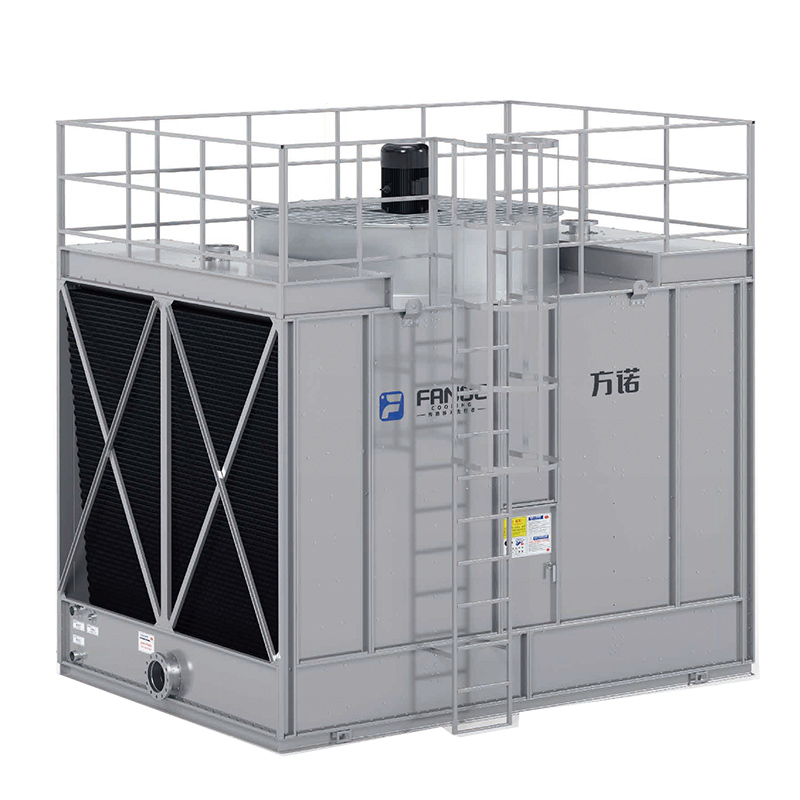 Cooling Tower Guide: Types, How They Work & Selection CriteriaHow a Cooling Tower Actually Works A cooling tower is a heat rejection device that removes waste heat from a process or building system by transferrin...
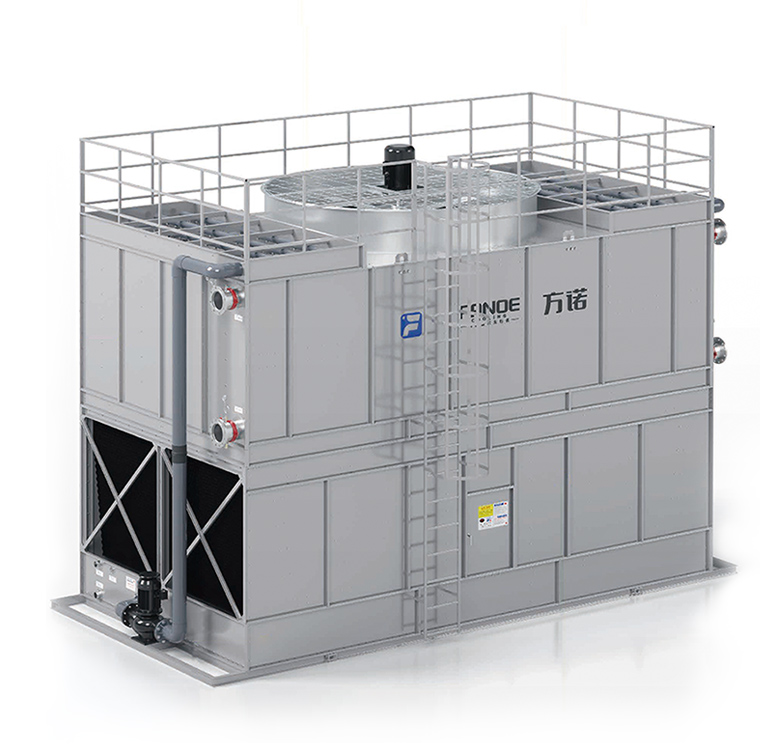 Industrial Cooling Towers: How They Work, Types, and How to Keep Them Running RightWhat Industrial Cooling Towers Do and Why They Matter Industrial cooling towers are large heat rejection systems designed to remove excess thermal en...
 Evaporative Condenser Explained: How It Works, How to Choose One, and How to Keep It RunningWhat Is an Evaporative Condenser and How Does It Work? An evaporative condenser is a heat rejection device that combines the functions of a condenser ...