What Is a Dry and Wet Combined Cooling Tower and Why Does It Exist?
A dry and wet combined cooling tower — also called a hybrid cooling tower, plume-abated cooling tower, or wet-dry cooling tower — is a single integrated unit that combines two fundamentally different heat rejection mechanisms: evaporative (wet) cooling and sensible (dry) cooling. Conventional wet cooling towers reject heat primarily through evaporation of water, which is thermodynamically efficient but consumes significant volumes of water and produces a highly visible water vapor plume. Dry cooling towers (air-cooled heat exchangers) reject heat entirely through sensible air heating with no water consumption, but require much larger surface areas and perform poorly in high ambient temperatures. The combined hybrid tower was developed specifically to capture the efficiency advantages of wet cooling while simultaneously addressing wet cooling's two most significant drawbacks: high water consumption and persistent visible plume formation.
In a hybrid cooling tower, the process fluid passes through both a dry coil section (where heat is rejected to the airstream without any water contact) and a wet fill section (where evaporative cooling occurs) either in parallel or in series, depending on the design configuration and the ambient conditions at the time. A control system modulates the split between dry and wet operation to minimize water use while maintaining the required leaving fluid temperature. During cooler ambient conditions — typically below 15°C — the system can often operate entirely in dry mode with zero water consumption. As ambient temperature rises and dry cooling capacity becomes insufficient, the wet section is progressively activated to supplement cooling capacity. This operational flexibility is the defining characteristic that distinguishes a combined cooling tower from a simple wet tower with an added coil.
The practical result is a cooling tower that can achieve 50–80% reduction in annual water consumption compared to a conventional wet tower of equivalent thermal capacity, virtually eliminate the visible cold-weather plume that is a planning and permitting obstacle in urban and residential-adjacent sites, and maintain acceptable thermal performance across a wider range of ambient conditions than a pure dry cooler. These attributes have made hybrid cooling towers increasingly standard in data centers, pharmaceutical plants, food processing facilities, power generation, and any application where water scarcity, discharge regulations, or visual impact constraints would disqualify a conventional wet tower.
How the Heat Transfer Mechanisms Work in a Hybrid Cooling Tower
To understand why hybrid cooling towers perform the way they do, it helps to understand the physics of both heat rejection modes operating inside them and how their combination produces the plume abatement effect.
The Wet Section: Evaporative Cooling
In the wet fill section of a hybrid tower, warm process water is distributed across a structured plastic fill pack and exposed to an upward or cross-flowing airstream. Heat transfer occurs through two simultaneous processes: sensible heat transfer (direct temperature difference between the water film and the air) and latent heat transfer (evaporation of a fraction of the water, absorbing approximately 2,450 kJ per kilogram of water evaporated). Evaporation accounts for 70–80% of the total heat rejected in a wet tower, which is why wet cooling is so thermodynamically efficient — it allows approach temperatures (difference between leaving water temperature and ambient wet-bulb temperature) of just 3–5°C. This is fundamentally impossible with dry cooling, which is limited by the dry-bulb temperature. The wet section's exhaust air is saturated and warm — typically at 30–40°C and 100% relative humidity — which is the source of the visible white plume when this air meets cooler ambient air and condensation occurs.
The Dry Section: Sensible Heat Rejection
The dry coil section in a hybrid tower consists of finned-tube heat exchangers, typically aluminum fins on galvanized steel or stainless steel tubes, through which process water or glycol solution flows. Air passes over the fin surfaces, absorbing sensible heat from the fluid without any water contact or evaporation. The dry section exhaust air is warm and dry — significantly below saturation at typical ambient humidity levels. When this hot dry air is mixed with the saturated wet exhaust from the wet section, the mixture drops below saturation (relative humidity below 100%), and the visible plume disappears or is dramatically reduced. The dry section operates continuously regardless of mode, pre-heating the inlet air in winter (which suppresses plume formation most effectively) and pre-cooling the process fluid before it enters the wet section. The ratio of heat rejection between dry and wet sections determines both the plume abatement effectiveness and the water consumption rate.
Air Mixing and Plume Suppression Physics
Plume visibility is determined by the psychrometric state of the tower exhaust air — specifically, whether its moisture content exceeds the saturation humidity of the ambient air it mixes with. In a pure wet tower, exhaust air is always saturated and warm; when it mixes with cool ambient air, the mixture enters the saturation zone and water droplets condense, forming the visible white plume. The dry section in a hybrid tower adds a stream of warm, sub-saturated air to the exhaust mix. By controlling the proportion of dry to wet airflow, the combined exhaust can be maintained below the saturation threshold at virtually all ambient conditions. This is why hybrid towers are specified as "plume-abated" rather than merely "plume-reduced" — when properly designed and operated, they produce no visible plume for the vast majority of annual operating hours, typically above 95% of hours, with full plume suppression achievable above ambient temperatures of 5–8°C depending on humidity.
Design Configurations: Parallel Flow vs. Series Flow Hybrid Towers
Not all combined cooling towers are arranged the same way. The two primary design configurations differ in how the process fluid is routed through the dry and wet sections, and each has specific advantages for different applications and climates.
Parallel Configuration (Split Fluid Flow)
In a parallel hybrid tower, the process fluid is split into two streams — one routed through the dry coil section and one through the wet fill section — with the two streams rejoining after heat rejection. The proportion of flow through each section is controlled by modulating valves. In winter or cool ambient conditions, the majority of flow is directed through the dry coil (minimizing or eliminating water use and plume). As ambient temperature rises, more flow is progressively directed through the wet section to maintain the target leaving fluid temperature. This configuration offers maximum operational flexibility and very precise water use control, and it allows the wet section to be completely isolated and drained during sub-zero ambient conditions to prevent freeze damage, while the dry section continues to operate. It is the dominant configuration for industrial process cooling and data center cooling applications where water savings and operational flexibility are the primary drivers.
Series Configuration (Sequential Fluid Flow)
In a series hybrid tower, the process fluid flows first through the dry coil section (pre-cooling) and then through the wet fill section (final cooling), with the dry section always active. The dry pre-cooling section reduces the inlet temperature to the wet fill, which reduces the evaporation load and water consumption in the wet section. In some designs, the dry section removes enough heat to allow the wet section to be bypassed entirely during cool ambient conditions. Series configurations provide a simpler fluid circuit without split-and-rejoin valving and tend to be more compact for a given thermal duty. They are commonly used in HVAC applications and smaller process cooling installations where installation simplicity and footprint are important. The trade-off is somewhat less precise control over water usage compared to a parallel configuration with full proportional flow splitting.
Mechanical Draft Arrangements: Counter-flow vs. Cross-flow
Within either parallel or series configurations, the airflow arrangement through the tower can be counter-flow (air moves upward through the fill, opposite to the downward water flow) or cross-flow (air moves horizontally through the fill, perpendicular to the downward water flow). Counter-flow hybrid towers achieve slightly better thermal performance for a given fill volume due to the higher driving force maintained across the fill height, but they are taller and have higher fan energy requirements. Cross-flow hybrid towers are lower-profile, easier to access for maintenance, and more modular — making them popular for urban rooftop installations and facilities with height restrictions. Both arrangements are available from major hybrid tower manufacturers including Baltimore Aircoil (BAC), Evapco, SPX Cooling Technologies, and ENEXIO.
Comparing Hybrid Cooling Towers to Pure Wet and Pure Dry Alternatives
Selecting the right cooling technology requires understanding how dry and wet combined cooling towers stack up against conventional alternatives across the performance, economic, and environmental parameters that matter most to system designers and plant operators.
| Parameter |
Conventional Wet Tower |
Dry and Wet Combined Tower |
Pure Dry Cooler (ACC) |
| Cooling Mechanism |
Evaporative only |
Evaporative + sensible (hybrid) |
Sensible only |
| Annual Water Consumption |
High (100% baseline) |
Low–Medium (20–50% of wet) |
Zero |
| Visible Plume |
Yes (significant in winter) |
Minimal to none (>95% plume-free hours) |
None |
| Thermal Performance at High Ambient Temp |
Excellent |
Very Good |
Poor (performance drops sharply) |
| Leaving Water Temperature Approach |
3–5°C above wet-bulb |
5–10°C above wet-bulb |
5–15°C above dry-bulb |
| Capital Cost (relative) |
Low (1×) |
Medium–High (1.8–3×) |
High (2.5–4×) |
| Water Treatment Cost |
High |
Low–Medium |
None |
| Legionella Risk |
High (requires active management) |
Low–Medium (reduced wet operation) |
None |
| Fan Energy Consumption |
Low–Medium |
Medium–High |
High |
| Footprint |
Compact |
Medium |
Large |
The hybrid combined cooling tower occupies the optimal middle ground for a large number of real-world installations — particularly those in water-stressed regions, urban environments with visible plume restrictions, or regulated sites where Legionella risk and chemical discharge limits make conventional wet cooling increasingly difficult to permit and operate.
Water Savings: How Much Does a Hybrid Cooling Tower Actually Save?
One of the most frequently asked questions about dry and wet combined cooling towers is how much water they actually save compared to a conventional wet tower of equivalent capacity — and whether those savings justify the higher capital cost. The answer depends heavily on the climate, the system's operating load profile, the target leaving water temperature, and the control strategy used to transition between dry and wet modes.
Water Consumption Breakdown in a Wet Tower
In a standard evaporative cooling tower, water is consumed through three pathways: evaporation (the dominant loss, typically 0.1–0.2% of circulating water flow per °C of cooling range), drift (water droplets carried out by the airstream, typically 0.001–0.005% of circulation flow in modern towers with high-efficiency drift eliminators), and blowdown (deliberate purge of concentrated circulating water to control dissolved solids buildup, typically 0.5–1.5% of circulation flow depending on cycles of concentration and makeup water quality). For a 1 MW heat rejection load with a 10°C cooling range, a conventional wet tower consumes approximately 1.5–2.0 m³/hr of makeup water under typical summer conditions.
Annual Water Savings Calculation Framework
Water savings from a hybrid combined cooling tower are calculated by analyzing the hours during the year when ambient conditions allow partial or full dry operation. For a site in Central Europe (e.g., Germany, France) with a design wet-bulb temperature of 23°C and a leaving water temperature target of 30°C, a well-designed hybrid tower can operate in full dry mode for approximately 3,000–4,000 hours per year (the hours when ambient dry-bulb temperature is below approximately 25–28°C with sufficient humidity margin). In partial dry/partial wet mode for another 2,000–3,000 hours, the wet evaporation rate is proportionally reduced. The net result is annual water consumption of 20–40% of what a conventional wet tower of the same thermal capacity would consume — typically saving 500–2,000 m³ of water per MW of installed cooling capacity per year, depending on location and operating profile.
Climate-Dependent Water Savings Benchmarks
Water savings potential varies significantly with geography. In cool, temperate climates (Northern Europe, Pacific Northwest USA, Canada) where ambient temperatures are below 15°C for more than half the year, hybrid towers can achieve 60–80% annual water reduction. In Mediterranean or semi-arid climates (Southern Europe, Middle East, Southwest USA) where high temperatures persist for many months, water savings are more modest — typically 30–50% — because dry operation hours are fewer and the wet section must carry a larger share of the annual cooling load. In tropical climates with consistently high wet-bulb temperatures year-round, hybrid towers offer primarily plume control benefits with limited water savings, and their higher capital cost is harder to justify on water economics alone.
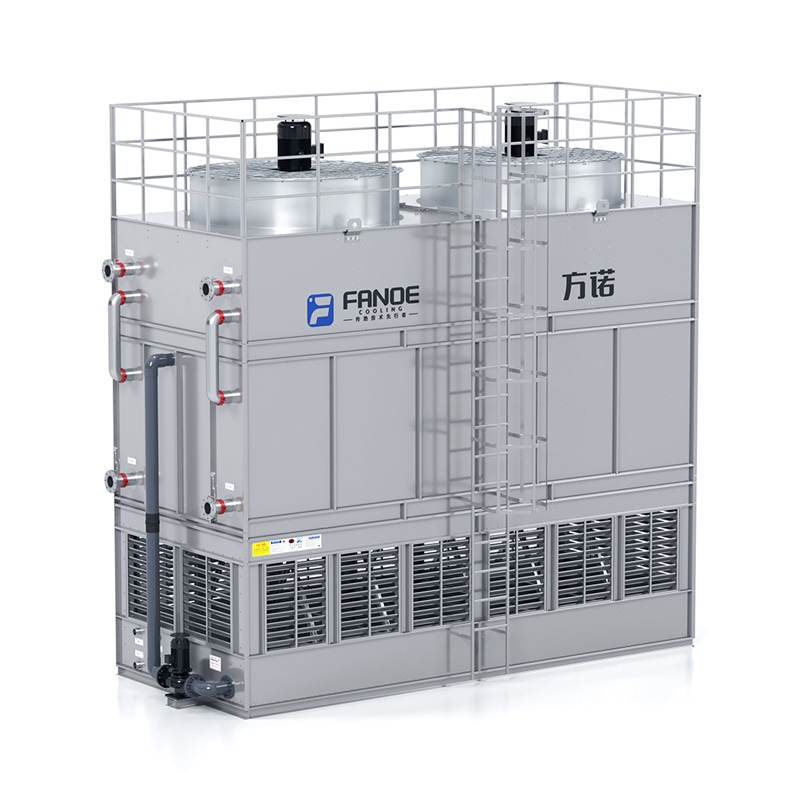
Key Applications Where Hybrid Cooling Towers Are the Right Choice
Understanding where a dry and wet combined cooling tower provides a compelling advantage over alternatives helps narrow down whether the investment is justified for a specific project.
- Data Centers and Hyperscale Facilities: Water scarcity and public criticism of water use by large data centers have made hybrid cooling towers a favored solution for high-density computing facilities in temperate climates. A 10 MW data center using a conventional wet tower can consume 40,000–80,000 m³ of water annually; a hybrid tower reduces this to 10,000–30,000 m³ while maintaining the low leaving water temperatures (typically 24–28°C supply to chillers) needed for efficient IT cooling. Major hyperscale operators including Microsoft, Google, and Amazon have specified hybrid and water-saving cooling towers as part of their water neutrality commitments.
- Urban HVAC and District Cooling Plants: In city center locations — office towers, hospitals, shopping centers, and district energy plants — planning authorities in many jurisdictions now require or strongly incentivize plume abatement on new cooling tower installations due to visual impact on the built environment, ice formation on nearby surfaces in winter, and public health concerns about Legionella. Hybrid towers satisfy these requirements without the large footprint and high energy consumption of a full dry cooler.
- Power Generation (Combined Cycle and Industrial Power): Power plants in water-constrained regions — particularly in the western United States, parts of Australia, the Middle East, and Southern Europe — face regulatory limits on freshwater withdrawal or are sited in areas without sufficient water supply for fully wet cooling. Hybrid wet-dry cooling systems (in larger format than building-scale towers, often called wet-dry surface condensers or hybrid plume-abated cooling systems) allow power plants to meet water use limits while avoiding the significant output derating that pure dry cooling imposes on hot days.
- Pharmaceutical and Biotechnology Manufacturing: GMP (Good Manufacturing Practice) facilities require reliable process cooling with very low Legionella risk, minimal environmental compliance burden, and in many cases, zero-visible-plume operation to comply with local planning consents. Hybrid towers address all three requirements, and their reduced wet operation time significantly lowers the risk and management cost associated with Legionella in the water system.
- Food and Beverage Processing: Food processing plants with large refrigeration loads located in water-stressed agricultural regions face competing pressures: water is needed both for process use and for cooling, and discharge of chemically treated blowdown water can be restricted by local environmental permits. Hybrid towers reduce both makeup water demand and blowdown volume, easing both supply and discharge constraints simultaneously.
- Chemical and Petrochemical Plants: Process cooling in chemical plants often requires year-round reliable performance across wide ambient temperature ranges. A combined dry and wet cooling tower provides this reliability through the wet section during peak summer conditions while operating dry through most of the year, reducing chemical treatment costs, corrosion risk in the recirculating water system, and the regulatory reporting burden associated with high-volume cooling water discharge.
Critical Design Parameters for Specifying a Combined Cooling Tower
Correctly specifying a dry and wet combined cooling tower requires careful definition of the thermal duty and the climatic and operational constraints the unit must handle. Under-specifying leads to inadequate performance on hot days; over-specifying wastes capital investment in unnecessary dry coil surface area. These are the key parameters that must be defined before engaging suppliers for quotation.
Thermal Design Conditions
Specify the heat rejection duty in kW or MW, the inlet water temperature (hot water temperature, HWT), the target outlet water temperature (cold water temperature, CWT), and the design ambient wet-bulb temperature (WBT) and dry-bulb temperature (DBT). For a hybrid tower, two sets of design conditions are typically required: a summer peak condition (where the wet section carries the majority of the load, usually based on the 1% or 2% annual exceedance ambient temperature) and a winter or mid-season condition (where full dry operation is targeted, based on ambient conditions for the coldest 30–40% of annual operating hours). Defining both conditions allows the manufacturer to correctly size both the wet fill and the dry coil sections.
Water Savings Target and Plume Abatement Requirement
Define the annual water savings target as a percentage reduction relative to an equivalent conventional wet tower, or as an absolute volume limit per year. Additionally, specify the plume abatement standard required — for example, "no visible plume at ambient temperatures above 5°C" or "plume-free operation for a minimum of 95% of annual operating hours." These targets directly determine the required dry coil surface area and the dry/wet split ratio, so they must be stated clearly in the specification to allow meaningful comparison between supplier proposals.
Material and Corrosion Specifications
The dry coil section is the most critical component for long-term reliability. Specify tube material (copper, stainless steel 316, or titanium for aggressive water qualities), fin material (aluminum for standard service, epoxy-coated aluminum for coastal or industrial atmospheres, stainless steel for severe chemical environments), and tube-to-fin bonding method (mechanically expanded vs. brazed). The wet section fill material (typically PVC or HDPE for the fill packs, hot-dip galvanized or stainless steel for the casing and structure) and the basin material (fiberglass, stainless steel, or coated concrete) must also be specified based on the circulating water chemistry and any regulatory requirements for basin inspection access.
Control System Integration
A hybrid cooling tower's water savings and plume control performance are only as good as its control system. Specify whether fan speed control should be via two-speed motors, VFDs (variable frequency drives — preferred for energy savings and precise capacity modulation), or fixed-speed motors with air dampers. Define the control variables: leaving water temperature as the primary setpoint, with ambient dry-bulb and wet-bulb inputs used to determine the optimal dry/wet split. Integration with building management systems (BMS) or plant distributed control systems (DCS) via BACnet, Modbus, or Profibus protocols should be specified to enable remote monitoring, alarm management, and data logging for water savings verification.
Water Treatment and Legionella Management in Hybrid Systems
The reduced water consumption in a combined dry and wet cooling tower changes — but does not eliminate — the water treatment and Legionella management requirements compared to a conventional wet tower. In some respects, hybrid towers present unique water management considerations that require specific attention.
Higher Cycles of Concentration in the Wet Circuit
Because a hybrid tower uses less makeup water than a conventional wet tower (due to reduced evaporation hours), the ratio of total dissolved solids (TDS) buildup to blowdown rate changes. To maintain the same TDS level in the circulating water, either blowdown must be reduced proportionally (which actually reduces blowdown volume in proportion to makeup reduction — a positive outcome) or cycles of concentration (COC) can be increased, reducing blowdown further. However, operating at higher COC (above 5–6) increases the risk of calcium carbonate and silica scaling on both the wet fill and dry coil surfaces. A water treatment specialist should model the steady-state circulating water chemistry at the intended COC and design the chemical treatment program (corrosion inhibitors, scale inhibitors, biocides) accordingly.
Legionella Risk During Seasonal Wet Section Activation
A specific Legionella risk in hybrid towers arises from the seasonal or periodic activation of the wet section after periods of dry-only operation. During a prolonged dry mode period, the wet fill section, distribution pipework, and basin can warm up to temperatures above 25°C (the lower threshold for Legionella proliferation) if not properly maintained. When the wet section is then activated, it may be recirculating water through a warm, stagnant system that has not been biocide-treated recently. A written risk management scheme must include procedures for pre-activation disinfection of the wet circuit after any dry-only period exceeding 72 hours, along with regular ATP monitoring and microbiological sampling of the circulating water. Most national Legionella management regulations (HSE L8 in the UK, VDI 2047 in Germany, ASHRAE 188 in the USA) explicitly address cooling towers with intermittent wet operation.
Basin Design for Stagnation Prevention
Cold water basin design in hybrid towers should minimize dead zones where water can stagnate and warm without treatment circulation. Specify basin sweeper nozzles or recirculation pumps with timer control to maintain water movement during dry-mode operation. Basin heaters are required in climates with sub-zero winters to prevent freezing when the wet section is idle. Automatic basin dump and refill capability — activated after extended dry-mode periods — should be included in the control specification to purge stagnant water before wet section restart.
Maintenance Requirements and Lifecycle Cost Considerations
A dry and wet combined cooling tower has a more complex mechanical and control system than a conventional wet tower, which translates into somewhat higher maintenance requirements. However, the reduced water consumption significantly lowers operating costs over the equipment's 20–25 year service life, and the lower Legionella risk reduces management costs and liability exposure. Here is a practical summary of the key maintenance tasks and lifecycle cost drivers:
- Dry coil inspection and cleaning (annual): The finned-tube dry coil sections accumulate airborne dust, pollen, insects, and in industrial environments, oily deposits or chemical fumes. Blocked fin surfaces reduce dry cooling capacity and increase fan energy consumption. Annual pressure washing of the fin surfaces from the air side (using low-pressure water at 30–50 bar to avoid fin damage) and chemical coil cleaning where deposits are adhesive is standard practice. Inspect tube surfaces for signs of corrosion or pinhole leaks at least annually, particularly in the first five years of operation.
- Wet fill inspection and replacement (every 5–10 years): PVC fill packs in the wet section degrade over time through UV exposure, biological fouling, and scale accumulation. Inspect annually for sagging, blocking, or cracking, and replace sections as needed. Heavy scale deposits on fill reduce effective surface area and should be removed by acid cleaning (typically 5–10% hydrochloric or citric acid solution) during scheduled shutdowns. Fill replacement is typically needed every 8–15 years depending on water quality and fouling rate.
- Fan and motor maintenance (per manufacturer schedule): Fan blade condition (checking for erosion, leading edge damage, and balance), gearbox oil level and condition (for gear-driven fans), VFD calibration, and motor insulation testing should be performed according to the manufacturer's recommended intervals. Fan vibration monitoring using portable or permanently installed vibration sensors is best practice to detect bearing deterioration before it causes fan failure during peak cooling season.
- Control system and valve verification (semi-annual): The modulating control valves and dampers that govern the dry/wet flow split are critical to water savings performance. Verify valve stroke and positioning accuracy, actuator response time, and control loop calibration semi-annually. A stuck or drifting valve that defaulted to full wet operation would eliminate the water savings benefit without triggering an obvious alarm in many control systems — regular manual verification is essential.
- Drift eliminator inspection (annual): High-efficiency drift eliminators in the wet section prevent water droplet carriage into the dry section and reduce aerosol emissions (relevant for Legionella risk reduction). Inspect annually for cracks, misalignment, or biological fouling that could allow liquid water to migrate into the dry section and cause corrosion of the finned coils.
Over a 20-year operational life, the higher capital and maintenance cost of a hybrid combined cooling tower is typically offset by water purchase cost savings, reduced chemical treatment expenditure (proportional to reduced makeup and blowdown volume), lower wastewater discharge fees, and avoided costs associated with water supply risk in regions where cooling water availability is constrained. Lifecycle cost analyses for mid-latitude temperate climates consistently show payback periods of 4–9 years relative to a conventional wet tower when both water and energy costs are fully accounted for, with positive net present value over the full equipment life.



 Eng
Eng English
 中文简体
中文简体

 What Is an Open Circuit Cooling Tower and How Does It Work?
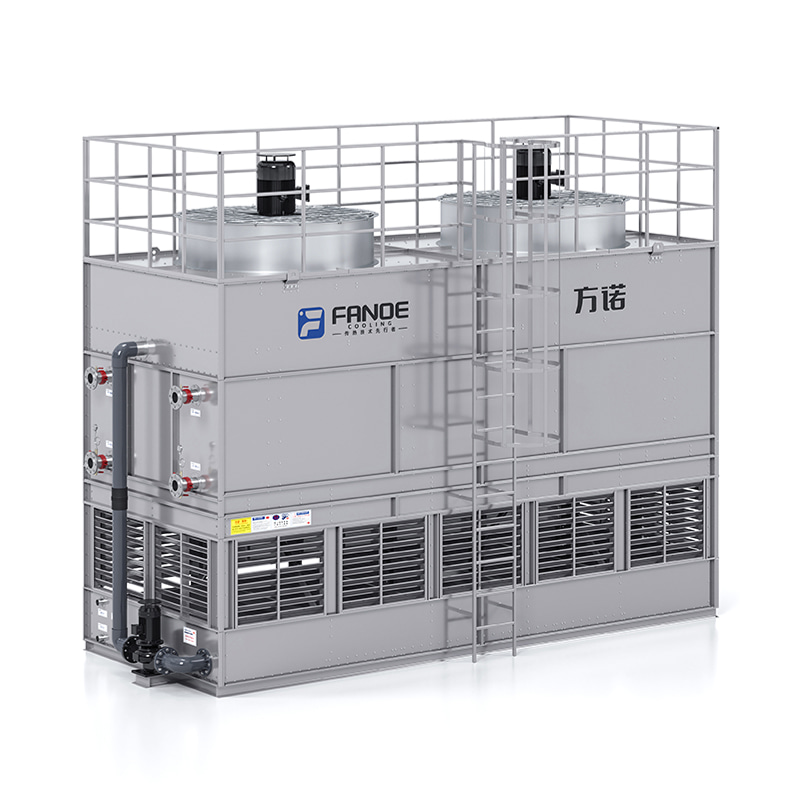 What Is a Closed Type Cooling Tower and When Should You Use One?How a Closed Type Cooling Tower Actually Works A closed type cooling tower — also widely referred to as a closed-circuit cooling tower, closed-loop c...
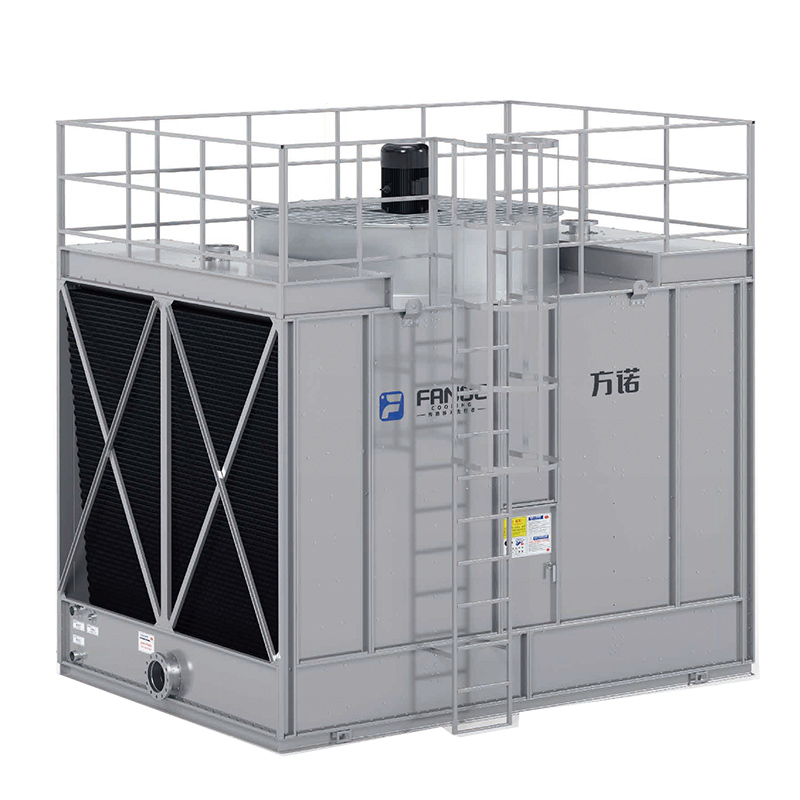 Cooling Tower Guide: Types, How They Work & Selection CriteriaHow a Cooling Tower Actually Works A cooling tower is a heat rejection device that removes waste heat from a process or building system by transferrin...
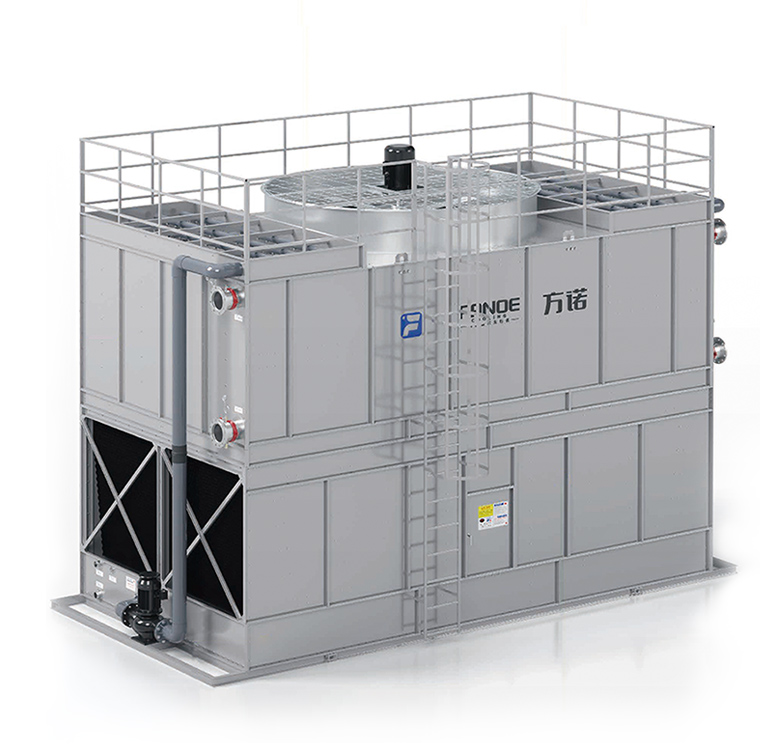 Industrial Cooling Towers: How They Work, Types, and How to Keep Them Running RightWhat Industrial Cooling Towers Do and Why They Matter Industrial cooling towers are large heat rejection systems designed to remove excess thermal en...
 Evaporative Condenser Explained: How It Works, How to Choose One, and How to Keep It RunningWhat Is an Evaporative Condenser and How Does It Work? An evaporative condenser is a heat rejection device that combines the functions of a condenser ...